Introduction
November 26 at 6 A.M.,
companies A, B, E and H set off towards Hancock, 26 miles west of
Williamsport. Fighting was reported
there the previous day and it was thought re-enforcements were
necessary. After a 10 mile trek in
darkness up a mountain road the detachment stopped for the night at
Clear Spring Hotel where most of the men
slept in the attached barn. After a hotel breakfast the
following morning, the remaining 10 miles
or so to Hancock was made. By now the 13th Regiment
soldiers
were experts at marching. Past Indian Springs
they crossed the bare summit of a mountain which revealed “a
magnificent prospect” of “numberless hills” with blue
mountains beyond, and the winding Potomac
below. The distant sound of
cannonading gave haste to their footsteps and hurried them to Hancock.
The fighting proved to be several miles
beyond, so they took up their quarters in town. John Noyes
described the town as having about 800
inhabitants and one of the busiest places in this part of Maryland, the
center of business for that state as well as for miles around.
Captain James A. Fox,
Company A, 13th Mass, was acting Major in command of
the detachment.
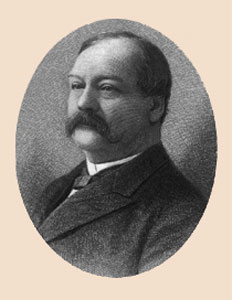 Captain Fox, age
34, studied law at the Harvard Law School and in Boston in the office
of John C. Park. In July
1860, he was 1st Lieutenant in the Boston Militia, the
"Boston City Guards," and was
one of the committee that petitioned the governor to appoint Samuel H.
Leonard captain in that organization to
fill a recent vacancy; (now Colonel Leonard, 13th
Mass). When
the 4th Battalion of Rifles was organized
Fox became Captain of Co. A. Private John B. Noyes, (Co. B)
wrote of
him
Captain Fox, age
34, studied law at the Harvard Law School and in Boston in the office
of John C. Park. In July
1860, he was 1st Lieutenant in the Boston Militia, the
"Boston City Guards," and was
one of the committee that petitioned the governor to appoint Samuel H.
Leonard captain in that organization to
fill a recent vacancy; (now Colonel Leonard, 13th
Mass). When
the 4th Battalion of Rifles was organized
Fox became Captain of Co. A. Private John B. Noyes, (Co. B)
wrote of
him
“He is a very
good officer, but
his ambition has been the Majority which he thinks he may never obtain.
He is a man of property and likes
a life of ease better than tent life.”
Fox returned to
Boston
in January 1862 on a recruiting
mission of indefinite length. It appears he never returned to
the field. He was popular with his
men and missed. They were disappointed when he
resigned in August 1862. His post war career in
politics was very successful. Fox was ever present at
13th Regiment re-unions and special occasions
after the war. His enthusiasm for the organization never
diminished. He was one of the orators at
the dedication of the regiment’s monument at Gettysburg in 1885.
Two days after arriving in
Hancock, Company E was dispatched 6 miles further up river on Nov.
29th, to guard the fords at Sir John’s
Run depot. On the 30th there was a skirmish with
rebel forces. George S. Cheney of Co. E was
slightly wounded.
The detachment played tag with
about 500 – 900 rebel pickets in the vicinity. Frequent
expeditions were made across the river to
Bath, Virginia in search of prisoners and forage. Companies
A, B, & H were all present for the first
of these expeditions Dec. 4th. Unfamiliar with the ground,
the men deployed as skirmishers along the
hilly road leading to Bath. Reaching the top Corporal Walter
Beaumont, Co. B, reported seeing the rebel
pickets’ tents. It proved to be only laundry blowing in the
breeze. The men reminded Beaumont
of his vigilance by asking “Who found the rebel tents?” to which the
reply was
“Beaumont.”

Captain William L. Clark of Company H, [pictured]
took a Mr. Swan, of Bath, prisoner as he was riding home in his buggy.
Mrs. Swan scolded
the captain saying she hoped he would be taken prisoner. The
captain replied he hoped she
would not be taken prisoner. Excerpts
from "The History of the 39th Regiment, Illinois Volunteer
Infantry", describe members of the Swan family and give an amusing
anecdote involving Capt. Joseph Cary,
Company B, and soldiers of Company A.
John B. Noyes was impressed with
the size of the large hotel at Bath run by Colonel John Strother
veteran of the war of 1812 and father of Col.
David Hunter, (of General Bank’s staff); pseudonym “Porte Crayon” whose
travel sketches of
Virginia decorated the pages of Harper’s Monthly.
The hot springs at Bath was a popular
destination before the war dating back to George Washington's
time. Noyes also reported the lack of
currency in the depopulated town, the site of gold and silver coins
causing the few inhabitants eyes to pop.
By mid December the bridges and
tracks of the Baltimore and Ohio railroad (on the Virginia side) were
repaired and trains
resumed daily service from Cumberland to
Hancock. December 16th the 39th Illinois arrived with their
1,000 new Springfield rifles. They
soon took positions at Bath & surrounding country, guarding the
B &
O railroad and bridges. The 5th
Connecticut was also camped nearby, ¾ of a mile from Hancock.
The increased troops made it livelier in
town and business was brisk at the local saloons. The 13th
had to establish 7 additional liquor guard
posts. Other than guard duty every three days, the duty at
Hancock was light, and it seemed like a five
week vacation for the men stationed there. There were no
drills or dress parades or fatigue duty.
It was possible to be absent all day as long as they answered roll call
at 8:30 p.m. No questions were
asked so the men were free to do as they pleased. The
abundance of game, partridges, rabbits, pheasants
and some deer made hunting a popular activity.
Ironically, General Stonewall
Jackson attacked the town just two days after the '13th Mass'
detachment was
recalled to Williamsport in early January.
Jackson had been bothered by the build up of Federal troops
along the Potomac and at Romney, WVa. &
considered his force at Winchester vulnerable to attack. He
decided to strike first.
PICTURE CREDITS:
Captain Fox, Captain Clark, and Captain Cary are
from AHEC,
Mass MOLLUS
Collection; The Biscoe Bros. photographs are from Southern Methodist
University, Central University Libraries, De Golyer Library,
http://digitalcollections.smu.edu/all/cul/civ/; Town of Hancock
(modern) is from Mr. Wayne Keefer, Board
of Trustees, Hancock, Historical Society; Lt. Joseph Colburn, Lt. Edwin
Frost, Corporal Walter Beaumont were shared with me by Mr. Scott Hann;
Berkley Hot Springs and the town as sketched by David Hunter Strother,
(Porte-Crayon) is from the website "The Valley of the Shadow'
http://valley.lib.virginia.edu/; Berkley Spring Hotel was
accessed digitally at
http://www.museumoftheberkeleysprings.com/; James
Lowell, Robert Bruce Henderson & N.M. Dyer, were
shared by Mr. Tim Sewell,
Lowell's descendant; Photo of Big Cacapon Bridge, Library of Congress;
The Photo of Dr. Charles M. Clark is from the book, "The
History
of the 39th Regiment,
Illinois Volunteer Infantry" By Dr. Charles M. Clark, Chicago,
Illinois, 1889; The engraving by ardent Secessionist Adalbert
Volk is from the Treasures of the New York Historical Society,
American Memory/Library of Congress website;
Warren
Hapgood Freeman's portrait is from the book Letters From Two Brothers
Serving in the War for the Union, Cambridge, 1871; Images of Mr.
Charles Wilson and Jane Catherine Henderson are from the Hancock
Historical Society, provided by Marion Golden on a personal trip to
Hancock in February, 2012; The Lock House was taken by the
author. All other images and maps are from the Library of
Congress Digital Collections; ALL IMAGES HAVE BEEN EDITED IN
PHOTOSHOP.
Return
to Top of Page
The March to Hancock
In the year 1884, T. Dwight Biscoe, with his brother Walter,
took a trip through Virginia, West Virginia, Maryland &
Pennsylvania, touring Civil War battlefields. They travelled
in horse & buggy over many of the same roads the boys in the
'13th Mass' once traversed, - again and again. Southern
Methodist University has posted 129 digital images of the
album on their DeGolyer Library website. See picture
credits above for the link. All the photos are carefully
labelled with location, date and time of day the images were
taken.
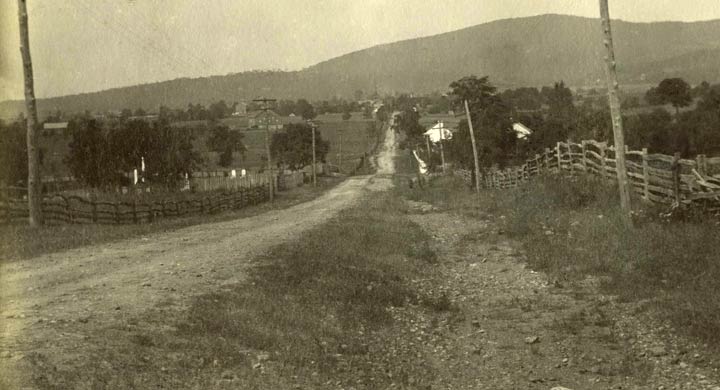
Village of Clear Spring on
Hagerstown and Cumberland Pike, looking West, August 8, [1884] 10:20
A.m.
Roxbury
City Gazette
(Letter transcription taken
from the now
defunct web-site "Letters of the Civil War").
Our
Army
Correspondence.
Hancock,
Nov. 20th, 1861.
Friend
Hutchinson.
– We have left our old camp ground at Williamsport,
and are at present at Hancock. Four companies of us at least
are camped
in town. Our march was for the most part a pleasant one, save
a few drops
of rain and hail which overtook us on the mountain. We
carried our
knapsacks as far as Clear Springs; they were then transferred to wagons
for the
rest of the march. The whole distance travelled was 26
miles. I
would you could follow us in our marches–the variety, the changing
scenes which
pass before our view would bewilder you. We crossed a portion
of the North
Mt.,
and when about half way up we came to Fair View Inn, and such a
view–fair view
it is, indeed. Imagine a spot where a vast area of country
spreads before
you; a spot from which you can see at least twenty towns. One
vast
panorama as far as the eye can reach–one broad landscape–beautiful,
magnificent. To be appreciated these things must be
seen. Tis well
for us to enjoy these scenes while we can; but while looking at the
beauty of
nature we must not forget that war is a terrible thing. This
fact is
brought out at every step. I was conversing with one man
whose whole
property lies in Virginia;
he has a large family to support, and as we passed along together he
gave a
synopsis of some of his wrongs. It is sad to realize the
disastrous
effect of this war upon private individuals, and it is painful to dwell
upon
wrongs over which we have no control. One man pointed out to
me some 25
acres of corn which he was obliged to leave in the field to save
himself from
being forced into the rebel service; he is now within speaking distance
of his
family, yet cannot go to them. He is also expecting his
horses and
cattle, his grain, his all, will be seized by those who know no
mercy.
Hundreds of good Union men are subjected to this test, but thank God,
they
adhere to the good old flag–they cling to the Union.
God help them; for we are only in a measure able to keep them from
harm; those
living on the borders suffer severely.
We have
quite a
rebel force opposite; we can take care them however. Co. E,
is all right,
and will always be, as long as our present commanders are with
us. As a
company we are unusually healthy, and all we want is a chance to show
what we
can do.
Hancock is
quite
a pretty place; its population may be 1000 or 1200–not more.
Many have
left, being in near proximity to the rebel forces; they have, and still
do fire
upon us occasionally, but our barkers will soon
silence them; we are
within six miles of Mason and Dixon’s line, and but a few miles from
the
Pennsylvania border.
Respectfully
yours,
Roxbury.
Digital transcription by
James Burton
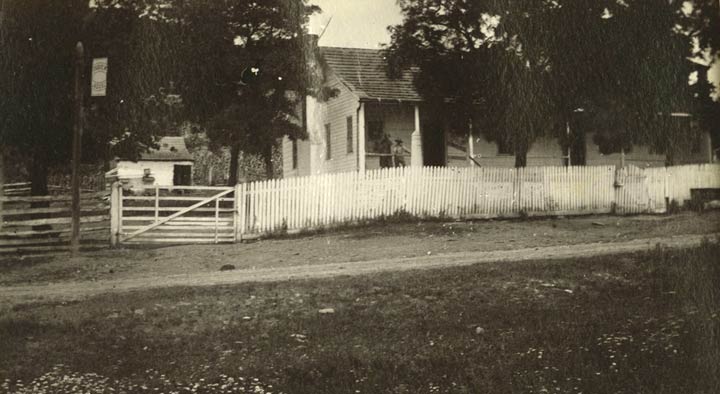
Pictured is 'Fair View House,' possibly the same place
mentioned in the letters below, where "Standing in the door of the inn,
you see spread out
before you nature and art commingled
together; fields, many of which still present to the eye, spots of that
beauty which once covered them –
forests stripped of their foliage, reminding one of a vast array of
shipping – the rail car, scarcely
seen in the dim distance winding its way among the mountain fastness,
- streams meandering their way o’
er rocky cliffs, or gently flowing through pleasant valleys, dancing in
the sunlight." The Biscoe Brothers were equally impressed
with the view and tried to capture it with their camera equipment, but
alas the image was over-exposed. What was left was a picture
of the side of the road framed by the branches of two trees,
and a vast whiteness inbetween.
Consequently, I leave out that view and post this one of the
Inn.
Chelsea Telegraph &
Pioneer
(Letter transcription taken
from the now
defunct web-site "Letters of the Civil War").
Chelsea Telegraph and Pioneer, December 7,
1861
Page 2, Col. 4.
November 30, 1861.
Thirteenth
Massachusetts
Detachment
of Advance Guard
Of the Upper Potomac,
Barracks Co. B., 13th Regt. Rifles,
Massachusetts Volunteers.
Hancock, Md., Nov. 30th, 1861.
Friend Editor:
Last Tuesday
we had orders to pack up our traps and get ready for a
force march. These orders came to us at 3 o’clock P.M., and
at 6 P.M. we started with three other
companies (Cos. A, E, and H,) under command of Capt. Fox, acting
Major. It was very dark and rained
almost all night. After marching about two and a half miles,
we had to ford two creeks, so that most of
us had to march the rest of the way with wet feet, which, on a cold
frosty night is not quite so agreeable.
At one
o’clock at night we arrived at a town called Clear
Spring. The hotels, and many of the private houses, were
thrown open to receive us. We stopped in
town till 7 o’clock next morning; then started over the mountain, it
raining and hailing al the time, and
at last came to a place called Hancock, twenty-seven miles from where
we started the day before. On
arriving, we learned that the rebels had been trying to cross the river
for several days, as there is a great
quantity of salt stored in the warehouses here. We had one
piece of artillery with us, and a few shot and
shell from this made the rebels scatter in every direction. It took
them by surprise, as they did not dream
that there where any soldiers in Hancock. They annoyed our
pickets very much by firing across at them,
but no one has been hurt yet. We are in a very comfortable
quarters, as we are in a large hall (formerly
used as town hall); Co. A is in a large house, Co. E in a church, Co. H
are quartered in a grain
warehouse. Friday, Nov. 29, Co. E went to a place six miles
above, opposite Sir John’s Run, Va., to
guard that ford, so that only three of our Cos. remain in town.
The
citizens of Hancock are most of them strong
Union people, and they do all in their power to make us as comfortable
as possible.
More some
other time.
A Chelsea Boy,
Co. B, 13th Regt. Rifles

The town of
Hancock looks
much the same today as it did during the time of the Civil War; as
shown in this contemporary photograph taken
by Mr. Wayne Keefer, secretary, and Board of Trustees Member of the
Hancock Historical Society.
The picture is
taken from the same vantage point as the vintage photograph at the top
of the page.
Return
to Top of
Page
Skirmish at Sir John' Run,
Company E

The
Map shows Hancock, located at the narrowest part of Maryland, Sir
John's Run to the West, where Company E was posted, and Bath, WV where
frequent raiding expeditions were made by squads from the '13th Mass.'
Also pictured is Cacapon, where detachments of the 39th
Illinois
went to guard the B&O Railroad.
Roxbury
City Gazette
Company E, Captain Charles R. M. Pratt commanding,
advanced a few miles farther up the river from Hancock to a
place along Sir John's Run on the Potomac. Unfortunately,
after searching high and low, I still do not have a picture of Capt.
Pratt, who is mentioned frequently. Second-Lieutenant
Edwin Frost, Co. E, is pictured.
(Letter
transcription taken from the now defunct web-site
"Letters of the Civil War").
Roxbury City Gazette
13th Massachusetts.
December 19, 1861.
Editor of the Gazette – Dear Sir: I presume you have
long before this heard of our move, or rather of the moving of four
companies, A B E and H.
We left
Williamsport Tuesday, 26th ult., for Hancock; marched to Clear
Springs that night, and stowed ourselves away, some in barns, others in
houses, and made ourselves as
comfortable as possible, under the circumstances; resumed our march
next morning to Hancock. We are again
in the mountainous part of Maryland. This march seemed rather
more tiresome to some of us than
usual. I scarcely know what to say about the scenery, it is
of a character so grand, in many places so
truly magnificent, that common place remarks fail to approach
it. Soon after leaving Clear Spring, we
began our journey up the North Mountain, arriving at Fair View Inn, we
get a view which richly repays the tired
traveler. Standing in the door of the inn, you see spread out
before you nature and art commingled
together; fields, many of which still present to the eye, spots of that
beauty which once covered them –
forests stripped of their foliage, reminding one of a vast array of
shipping – the rail car, scarcely
seen in the dim distance winding its way among the mountain fastness,
- streams meandering their way o’
er rocky cliffs, or gently flowing through pleasant valleys, dancing in
the sunlight,
Like some dark beauteous bird, Whose plume is sparkling with
unnumbered eyes.
Towns, villages,
streams, plains, mountains, – art and nature – all
dwelling on the bosom cannot fail to impress the beholder with
awe. We lose ourselves amid these scenes
of nature, and turning from ourselves, look to the Great
Source of all beauty and life. – From Fair
View Inn twenty-six towns can be distinctly seen.
Passing on our journey we arrive at
Hancock, a
town containing
about an equal number of Secesh and Union loving inhabitants.
There are several churches, two hotels,
Union and National, quite a number of stores; and last, but not least,
a larger number of pretty girls than is
usually found in one small town. Until we came here, I had
about made up my mind that a handsome woman
could not be found in Maryland.
 The companies are quartered in different buildings. Co.
E for two nights occupied a church. Friday morning at ten
o’clock we were again under marching
orders, (Co. E) After one of the most tiresome,
muddy marches, we reached Sir John’s Run, at
about 2 o’clock, P. M. – distance traveled, six miles. We
there met Capt. Carnes, Co. B, 1st
Vermont Regiment, he having come through on the canal boat.
Seeing a wagon load of goods over in Dixie,
he concluded to appropriate them to his own use. Covered by
our rifles, he brought the goods to our
side. They consisted of a sofa, spices, shoes, and quite a
number of very very small shirts, with other
articles to match. – Several shots were fired across. Carnes
proceeded up the canal – we to
look up our quarters for the night, finding which, after stationing
pickets, we turned in. All was quite
during the night. The next morning Capt. Pratt’s presence was
called for at the river. While
he, together with Lieuts. Colburn and Frost [Edwin Frost, pictured]
were standing there, the
rebels, by way of introduction, opened the
ball, one of which landed rather close to our gentlemanly
officers. ‘Twas very uncivil in the
rebels, but nothing compared to their afterpiece. The first
ball was a summons to arms. The boys
hastened to the scene of action, (just like the old folks of eighty odd
years since) and at it we went.
The rebels outnumbered us two to one, were completely sheltered behind
houses and trees. We were obliged
to do the best we could. We had a pretty little skirmish; the
bullets flew around with a perfect
looseness, whizzing and humming every which way; we found it very
necessary to dodge quite often, when would
come a ball, cutting the branches over our head; co-chuck, behind us on
the bank another would strike, until
after two hours firing, the rebels, from some cause, natural or
unnatural, stopped their fire. But one of
our number was wounded. He received a flesh wound in the
right leg, but is doing well, and will be out
next week. One thing is certain, the rebels made a mistake;
they know nothing about us – did not
suppose we had rifles, and having found out their mistake, will let us
alone for the future. Co. E’
s boys went over to Dixie yesterday, with what success I did not
learn. Co’s A and B also crossed
yesterday, bringing home a wagon load of corn, rakes, ? nails, turkeys,
& c., & c. Co. H,
captured a Mr. Swan, a noted rebel. I don’t think we shall remain here
long.
The companies are quartered in different buildings. Co.
E for two nights occupied a church. Friday morning at ten
o’clock we were again under marching
orders, (Co. E) After one of the most tiresome,
muddy marches, we reached Sir John’s Run, at
about 2 o’clock, P. M. – distance traveled, six miles. We
there met Capt. Carnes, Co. B, 1st
Vermont Regiment, he having come through on the canal boat.
Seeing a wagon load of goods over in Dixie,
he concluded to appropriate them to his own use. Covered by
our rifles, he brought the goods to our
side. They consisted of a sofa, spices, shoes, and quite a
number of very very small shirts, with other
articles to match. – Several shots were fired across. Carnes
proceeded up the canal – we to
look up our quarters for the night, finding which, after stationing
pickets, we turned in. All was quite
during the night. The next morning Capt. Pratt’s presence was
called for at the river. While
he, together with Lieuts. Colburn and Frost [Edwin Frost, pictured]
were standing there, the
rebels, by way of introduction, opened the
ball, one of which landed rather close to our gentlemanly
officers. ‘Twas very uncivil in the
rebels, but nothing compared to their afterpiece. The first
ball was a summons to arms. The boys
hastened to the scene of action, (just like the old folks of eighty odd
years since) and at it we went.
The rebels outnumbered us two to one, were completely sheltered behind
houses and trees. We were obliged
to do the best we could. We had a pretty little skirmish; the
bullets flew around with a perfect
looseness, whizzing and humming every which way; we found it very
necessary to dodge quite often, when would
come a ball, cutting the branches over our head; co-chuck, behind us on
the bank another would strike, until
after two hours firing, the rebels, from some cause, natural or
unnatural, stopped their fire. But one of
our number was wounded. He received a flesh wound in the
right leg, but is doing well, and will be out
next week. One thing is certain, the rebels made a mistake;
they know nothing about us – did not
suppose we had rifles, and having found out their mistake, will let us
alone for the future. Co. E’
s boys went over to Dixie yesterday, with what success I did not
learn. Co’s A and B also crossed
yesterday, bringing home a wagon load of corn, rakes, ? nails, turkeys,
& c., & c. Co. H,
captured a Mr. Swan, a noted rebel. I don’t think we shall remain here
long.
Respectfully Yours,
Roxbury,
[Digital Transcription by James Burton.]

Another Biscoe Brothers
View, "Looking Back to Hancock, from a Hill on the Left of the Pike
(South); August 2nd, [1884] 11:20 A.M.
Southern Methodist
University, Central University Libraries, De Golyer Library.
Letter
of James Ramsey
James
Ramsey
describes the skirmish mentioned in the newsclipping
above. (There is little punctuation in Ramsey's letters,
but it is generally clear where
sentences begin and end).
Sumners
Store opposite
Sir John’s run Va. Nov 29th 1861.
Dear Mother
I am well I received your letter yesterday
afternoon in a church in Hancock I had no
time to write as we had orders to march to Sir John’s run early next
morning I was glad to
hear from you I wrote a letter to Father and sent
the money by Mr. Cook also a letter to Ella with
the daguerotype which I hope you will get. I suppose you will
hear about the thanksgiving dinner. I
enjoyed it as well as might be expected Nov. 30th
1861. I was on picket at the time of
commencing this letter I was called off to take my
post. We had a setting room of a house for a
guard house it poured all night and two of us had to keep still as
death back to back so as to hear any one who
attempted to cross the river I am wet
through on the morning watch I was call
down to the waters edge by a women in Virginia she told me
the rebels had been reinforced by @ 500 men at
Bath a distance of two miles she said she thought they would
fight and wanted to cross the river into
Maryland. I told her I would see the captain about
it. After I had been relieved from
guard and was eating my dinner breakfast I heard
firing and most of the men took their guns and
went out on the bluff I went up into the hay loft
where our mess are quarterted and looked out of
the door I saw a gun fired out of the woods on the
opposite bank of the river to the left of the
town in and instant a dozen bullets went in that
direction I took my equipments and gun
and went out on the bluff and fired one shot at the thicket where they
were firing from the way the
bullets whistled by my ears I left double quick for a rail fence the
orders were to find cover. I squat
down and commenced to load and fire the battle then
began to be pretty hot they were
under cover of the woods while
(p2)
while we were on a hill with but one rail fence
through which
the bullets would come and two or three
trees the place in the fence where I was the
bullets would go cochunk into the rails it made me
think of home and pray while I was firing they
could not see me but they fired in the direction of
the smoke there was two others in the same place
one
of the fellows left and I began to think of a
safer place I loaded fired and would
retreat about ten feet and then dropp load and fire till
I got a better position where I pepered away at them the bullets came
as close as ever. one of our boys
was shot in the leg he left on a run for shelter of our barracks one of
our fellows helped him along I
gess some of the rebels were killed I heard one
yell among them they found our rifles to hot for
them and retreated to a mill where they had the advantage of us after
to hours hot fighting we withdrew We expect to be
at it again soon it
was the first battle I ever was in I
don’t think one of the boys acted cowardly I don’t think I
acted a cowards part although I
did not like the idea of being shot I
might have got away and no one have been the wiser but
I was among the last to leave the field I think I
should have been among the angels had I been
killed I felt happy. One of our men with
a companion went over the river in a boat and went
through the town a woman told them there was about
500 there in the morning they have got
back safe. I do not know how long we shall stay in this
place I cannot think of any more to
write by the way this paper come from Virginia yesterday
afternoon I will write some time about the
journey here we are in comfortable
quarters You need not worry about
me I
have found a savior in Christ or I would not have felt as I did in my
first battle perhaps you will
get the news by the paper before this letter this
will set your mind at ease Good by
for the present
Give my love to all Kiss Hugh for me
From your son
James
Letter
of George S. Cheney, Co. E;
wounded at Sir John's Run
George Cheney was the man wounded in the skirmish. His letter
home conveys the confidence the Union troops
had
that the war would be short. The skirmishing had an
air of excitement and fun about it. First-Lieutenant Joseph Colburn is
pictured.
(Letter
transcription taken from
the now
defunct web-site "Letters of the Civil
War").
LETTERS
OF
THE CIVIL WAR
DECEMBER 12, 1861.
From a letter received from George S.
Cheney of this city, who is a soldier in the Massachusetts Thirteenth,
and was wounded in the engagement at Sir
John’s Run, we learn the following particulars in regard to his
condition. He says :-
“I
have everything for my comfort – as much so as though I were at
home. When I received the shot, I
was placed in a very critical position, for a moment. At the
commencement of the engagement, I stationed
myself behind some bushes. As several of us were together,
firing rapidly, we soon drew the rebel fire
upon us, the bullets cutting the branches from the bushes, and
scattering the leaves about us. Seven
buried themselves in the ground not a foot from our position, finding
which to be a little too hot, and copying
a tree in the middle of the field, I attempted to gain it.
Three times I started, and three times the
balls stopped me, but I finally managed to reach the tree.
When there I found I could not get as good a
shot as I wanted, and concluded to get the cover of a rail
fence. I started and got about two-thirds of
the way, when I was stopped by one of their balls. A volley
was fired by the rebels, and the balls
whistled about my ears in a manner truly astonishing. I
seemed to hear the one that hit me before it
struck.  I stopped very quick, and
rolled up my pants to see
where I was hit. The balls continuing to
fly, the boys called out to me to lie down. I told them I was
shot, and in spite of the danger, many of
them rushed towards me. A noble set of fellows are E’s
boys. I walked to the barracks, Lieut.
Colburn with me. My wound is a flesh wound, somewhat sore and
painful, but no wise dangerous. I
escaped by a miracle. Had I been one inch farther in the
rear, by leg would have been crushed to powder;
as it is, neither bone, cord nor muscle are injured. People
may say what they please to the contrary,
there is music in the hum and whistling of bullets. Company E
has stood as hot fire as any company.
The firing continued two hours, being begun by the rebels, who were
sheltered by houses and trees, while we
were badly exposed. They must have been astonished at the
effect of our Enfield balls. They have
been used to being shot at with the old muskets, and probably did not
know what kind of arms we had. They
had at least four hundred men, while our number was about
eighty. I am the only one shot, but quite a
number had bullets through their pants. I have suffered very
little indeed, and have been treated with
the greatest kindness by Lieuts. Colburn and Frost, and all the boys;
in fact nothing has been left undone to
make me comfortable. I shall be out in a week or two, not
able to do duty, but able to walk around.
I am impatient to get out, as there is more or less firing going on
between Co. E and the rebels every day. I stopped very quick, and
rolled up my pants to see
where I was hit. The balls continuing to
fly, the boys called out to me to lie down. I told them I was
shot, and in spite of the danger, many of
them rushed towards me. A noble set of fellows are E’s
boys. I walked to the barracks, Lieut.
Colburn with me. My wound is a flesh wound, somewhat sore and
painful, but no wise dangerous. I
escaped by a miracle. Had I been one inch farther in the
rear, by leg would have been crushed to powder;
as it is, neither bone, cord nor muscle are injured. People
may say what they please to the contrary,
there is music in the hum and whistling of bullets. Company E
has stood as hot fire as any company.
The firing continued two hours, being begun by the rebels, who were
sheltered by houses and trees, while we
were badly exposed. They must have been astonished at the
effect of our Enfield balls. They have
been used to being shot at with the old muskets, and probably did not
know what kind of arms we had. They
had at least four hundred men, while our number was about
eighty. I am the only one shot, but quite a
number had bullets through their pants. I have suffered very
little indeed, and have been treated with
the greatest kindness by Lieuts. Colburn and Frost, and all the boys;
in fact nothing has been left undone to
make me comfortable. I shall be out in a week or two, not
able to do duty, but able to walk around.
I am impatient to get out, as there is more or less firing going on
between Co. E and the rebels every day.
[Digital
Transcription
by James Burton.]
Return
to Table of Contents
Expedition to Bath
While posted at
Hancock and environs, members of the 13th Mass made frequent
expeditions across the Potomac to Virginia, mostly to the town of Bath,
(Berkley Springs, today) to confiscate materials that might be useful
to the Confederacy. And to protect on-going repairs to the
Baltimore & Ohio railroad which ran through Virginia part of
the way along its route. The following history was prepared
by Jeanne Mozier and can be found at
http://berkeleysprings.com/towntour/tour1.htm

"Through cycles of
fashion,
notoriety, war and different notions
of progress, the healing magic of Berkeley Springs and its warm mineral
waters
has prevailed. One of the most famous of all Blue Ridge spas, the
springs were
the prime destination of noted colonial and post-Revolutionary War
visitors
including George Washington. Illustrious visitors continued through
several
Golden Ages including the 1840s through ‘60 and the Victorian era.
Although
there were no great Civil War battles fought in the area, Berkeley
Springs was
a southern resort and suffered a serious decline in business during the
war and
the following decade.
"Gambling,
horseracing and
high living were prominent sports
during the late 18th century prompting Methodist Bishop Francis Asbury
to proclaim
the town “that seat of sin.” Gambler Robert Bailey operated most of the
town’s
hotels in the opening decades of the 19th century.
"With the arrival
of the
railroad in the 1840s, Berkeley Springs
flourished as a popular summer resort with guests from Virginia and
Baltimore.
Colonel John Strother built the 500-room Berkeley Hotel on the south
end of the
park; the Fairfax Hotel dominated the street along the north side. More
than
800 people would visit during the summer season. Both hotels were
destroyed by
fire at the turn of the 20th century.
"Drink and bath
cures were prescribed using the warm mineral waters; baths were taken
at cool and artifically heated temperatures. Ills ranging from
rheumatism, and skin afflictions to digestive and nervous disorders
were said to benefit. In spite of medical claims, “taking the waters”
most often provided an excuse for social gathering. In 1769
George Washington spent five weeks at the springs and recorded more
than 25 dinners, social rides and teas."
[Sketch of the
hot springs by David Hunter Strother (1816-1888) – a successful
travel
writer & artist prior
to the war. pseudonym, “Porte
Crayon” (Pencil Case).
Accessed via http://valley.lib.virginia.edu/]
(Letter
transcription taken from the now defunct web-site
"Letters of the Civil War").
Our
Army Correspondence.
Letter from the 13th Regt.
DECEMBER
8, 1861.
Dumplin Valley Md,
Opposite Sir John’s Run, Va., Dec. 8.
Friend Hutchinson:–
Here we are, right side up, in Dumplin Valley; ain’t that a gay
name? Who or what this place is named after, I don’t know,
but it is a hard country, any way. – The rebels who were stationed
opposite us have left: they don’t like our Yankee guns and
pluck. They came up here to steal what they could from the
Union people, and to tear up the railroad, but they did not try
it. Another object they had, was to press all the Union men
they could into their army, but they did not make much at that; they
got fifteen and lost twenty; the fact is the people here are for the
Union, and they won’t fight against it. Yesterday, while I
was in Virginia, I met three men who had just got away from them, who
were going up into the mountains for safety, and they told me they had
slept in the woods and mountains for weeks, and even months.
We have been having some gay times here in Dixie. Yesterday
our company went to Bath, where is situated Berkly Springs, a famous
watering place. There are many small hotels, the largest of
which the boys took – also the bath house for their own use.
We meet some few secesh, and the female portion are very particular to
let you know that they are such. We have not got much
valuable property yet; yesterday the Captain got a mule and some
padlocks and two mail bags from a post office, where the post master
had turned secesh and run off. There are a great many
refugees here from Virginia, and it is sad to hear the stories of their
wrongs and sufferings. After the troops left, it was
astonishing to see the Union people come down to the river to ask the
Captain if they could come over to get coffee, sugar and salt, all of
which articles seem to be in great demand. No use though –
can’t let them have it. The people over there are actually
starving, but it won’t last much longer. The railroad is
almost completed to this place, and when finished we can pile in as
many troops as we will want. – Some of the boys have been up the road
for a number of miles on the hand cars. The cars will be run
down opposite to us. It is shameful to see the destruction of
property on the railroad; before many weeks every thing will be all
right in this part of the country. The people say that they
wish the Yankees would come over in strong force, then they would
surrender.
Yours respectfully,
Rockey.
Letter of Private John B.
Noyes, Company B
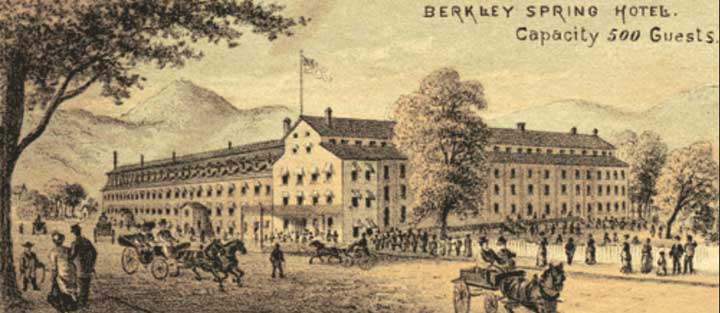
John
B. Noyes writes of the Berkley Springs Hotel owned and operated by
Union supporter, Colonel John Strother. The large structure
burned in March 1898. Unfortunately most of the buildings of
1860's Bath are gone. The older structures in the town still
standing today date to the late 19th Century.
Hancock
Md. Saturday Dec. 7th
1861
Dear Father,
Yours of
the
28th ult. was received Dec. 1st.
It found me in Hancock,
a town of perhaps 800 inhabitants, on the bank of the Potomac.
This is one of the busiest places in this part of Md.
& is the centre of business for Md.,
Penn.
& Va.
for many miles around. On
the opposite
side of the Potomac
runs the Balt. & Ohio
RR of which so much is said in the papers.
Co. E. has been sent to St. John’s
Run, and at that place had a skirmish with the
enemy, in which one of Co. E’s men was slightly wounded. A,
B, & H are
still here. Last
Wednesday detachments of Co’s B & H
crossed the Potomac. Not knowing the ground we
deployed as
skirmishers up the hilly road leading to Bath. From the top
of the hill
one of our men thought
he saw the enemy’s tents. The
officers
were called, men sent forward, and behold – a clothe’s line with all
its
toggery on.
 The
great question now is, -
“who discovered the Rebel tents ?”
to
which the reply is – Beaumont. We took one Mr. Swan, a
secessionist,
prisoner as he was coming down the road to his house in a
buggy. Mrs. Swan told Capt. Clark
that she hoped he
would be taken prisoner; to which he replied that he could not
reciprocate her
good wishes: he
hoped she would
not be taken.
The
great question now is, -
“who discovered the Rebel tents ?”
to
which the reply is – Beaumont. We took one Mr. Swan, a
secessionist,
prisoner as he was coming down the road to his house in a
buggy. Mrs. Swan told Capt. Clark
that she hoped he
would be taken prisoner; to which he replied that he could not
reciprocate her
good wishes: he
hoped she would
not be taken.
Mr. Swan
realizes to some extent my idea of a Virginia
gentleman. He did
not seem at all cast
down, but spoke of his general and the confederate forces, as we do of
our
general and forces. He
has a very
pleasant house and one or two very pretty daughters extremely
sesesh.
The next
day I
went with Co. B. A. & H as
escort to the grave of a soldier in Capt. Carnes’ Co, who was
accidentally
killed while on duty. The
services did
not impress me very deeply owing to the worse than wretched sermon of
the
Methodist Episcopal preacher who officiated.
Yesterday
at 3
Am we were routed out of bed in a
hurry. We formed in
front of Co A’s
quarters, and with that Co.
crossed the
river. We marched
till day light where
we reached Bath.
Along the route we saw the
smouldering fires
of the rebel pickets who had left the previous night.
When we reached the town scarcely a person
was on the street. By
and by a few
negroes & boys became visible and two or three men, whose
occupation had
saved them from the draft. Indeed
but 17
men were left in town; the others had joined either the federal or
confederate
army or had moved to Md.
or safer places in Va. Here I met old Col.
Strother whom I had seen
at Mr. Henderson’s store here. He
was at
his large, spacious hotel which far exceeds in size any hotel in
Boston,
capable of holding
several hundred visitors. For
here are
famous baths and hot springs
of the temperature of 74 degrees farenheit.
From them springs I suppose Bath
derives its name. 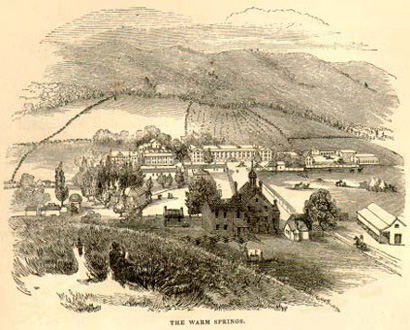 Col.
Strother, the
proprietor, is the father of Porte Crayon the author of sketches in
Va.,
who is now on Gen’l
Banks’ staff. The
old gentleman was a
Lieut. In the war of 1812 & is true to his country
still.
Here also was Mrs. Orrick*
whose husband we
would have liked to catch, and who lives next to Mr. Swan just across
the
River. Col.
Strother, the
proprietor, is the father of Porte Crayon the author of sketches in
Va.,
who is now on Gen’l
Banks’ staff. The
old gentleman was a
Lieut. In the war of 1812 & is true to his country
still.
Here also was Mrs. Orrick*
whose husband we
would have liked to catch, and who lives next to Mr. Swan just across
the
River.
Mrs. Orrick
is an ardent Union
lady notwithstanding her husband’s sympathies.
We managed after a while to get our breakfasts
at different houses in
the town in which a large proportion of the houses are deserted. But
the town
was pretty nearly eaten up as 900 rebel troups had left the previous
day. I had the
opportunity of buying two or three
small confederate notes before leaving.
By the way there is no currency in the town
except paper. Every
cent of cash has gone to “other
climes.” It is
astonishing how both
white mens as well a negroes’ eyes stuck out at the sight of gold and
silver we
amused ourselves with showing. Most
of
the soldiers who left Bath
were drafted, and I learned from good authority that but two in one of
the
companies were sesesh. They
were militia
and not volunteers or regulars. On
this
point the boys and men here were very distinct.
Few of the militia had uniforms & they
were variously armed, most
with altered flint locks. Some
with Sharp’s
rifles and fowling pieces. We
left town
about noon
on our return riches
of half a dozen geese or so.
I
hope you
will get safe through the operations on your teeth.
The quicker the thing is done with the better
so long as it is well done.
Have my
letters come safely home in a small bundle by Adams Express.
Banks’ Div. is now at Frederick.
It is reported that we are to winter at Hagerstown
or near it, but I know not with
how much truth. I
send a 10 cent note
for Charles. You
can give it to him. I
also send a plan of the Hotel at Bath.
With
love to all I am
Your
Aff. Son
John
B. Noyes.
NOTES: Beaumont
is Walter P.
Beaumont; age, 20: born, Dexter, Me.; clerk; musteerd in as corp., Co.
B, July
16, ’61; mustered out as sergt., April 24, ’63; appointed 1st
lieut., 8th unattached Co. H. A., Aug. 11, ’63;
capt., Co. G, 3d
Regt. H.A., Jan. 17, ’65; wounded, Aug. 30, ’62, at Manassas; also
wounded at
Battle of Washington; deceased (as of 1893).
Capt.
Carnes is from
the 1st Va.
Reg’t., Co. B.
*Mrs. Orrick is Margaret Cookus (or Cookes) wife of Johnson
Orrick, a Captain in the 33rd Virginia Infantry. He died in
the battle of Morganstown WV, June 21, 1863.
Return
to Top of
Page
Letters
of John
B. Noyes, Soldiers' fare & the Character of the
Regiment
Always keenly
observant and ready to
report on everything, John B. Noyes writes his aunt
about regional differences in dialect & food. This
fascinating letter is as much a commentary on New
England as Maryland. Noyes fondness for making puns
is evident throughout the letter.
Ms Am 2332
(23c) "By permission of the Houghton Library,
Harvard University."
Hancock Md. Saturday December 14th 1861.
Dear Aunt Rebecca
I half
promised in my last letter to Charles to write you, and mother,
about culinary matters in Maryland and Virginia. I do not now
speak of our culinary matters, because the
soldier’s fare though not much varied is restricted to the
army. We have as you know beef &
corn beef – beef steak & roast beef, corn beef, hot &
cold – occasionally, but very seldom,
salt beef hash, although there have been times when salt beef &
fried pork were our only substantial
food. Those times are now past, perhaps never to
return. There is nothing now to
complain of respecting army fare; it is good and wholesome and with
butter purchased at private expense I am
content. To day we had roast mutton, tender, but an exception
to our usual fare, for yesterday while, off
guard, I was in Pennsylvania enjoying private hospitality, several
members of our company were in Va. on a
foraging party. They brought back for our Co. 4 sheep and one
or two oxen. I haven’t had
mutton since I left the Miller’s at Antietam so you may judge how I
enjoyed it.
I wish to
speak of what I have seen at the boards of private families here
in Md. And perhaps before I speak of eatables it may be well
to speak of cooking essentials. You do
not take the water pail to fill the kettle with, but the water
bucket. If you were to make Buck wheats
you would use the tin bucket, not the tin pail. You need not
turn pale at this information though you are
allowed to smile. Very likely use would be made of coal hods
in our kitchens; coal buckets (the same
thing) are only used here. The damper of a stove pipe, not a
funnel is turned here, and you pour vinegar
into a cruet through a funnel, and not, as with us, through a
tunnel. The milk maid does not bring us
milk in a can, or even in a pail, but in a milk bucket, which in
reality is nothing but a common Massachusetts
tin pail.
There are
times for hog-butchering, and of course “scraps” can
be easily made, but if you were to ask till you were hoarse, as I am
now, you would never get any scraps in
Maryland. Say “cracklings” however, and you would be very
likely to get “scrap”
though very few Md. people eat them. They do not understand
how to make them truly edible and wonder at
Eastern people ever liking them. Apple butter is a
very common sauce here. It may be quaker
apple sauce, but of this I am doubtful. It is boiled a good
many hours & will keep for years.
Quince & Peach butter probably derive their name from a like
mode of cooking. Apple sauce is
different from apple butter, so I understand; and peach butter is
different from peach preserve, which last is
here invariably eaten with the most delicious cream. Citron
is also eaten in the same manner & it is
truly delicious. To sauce perhaps saus–age comes next in
order. Sausage is sausage the
country over, probably so called from the fact that sour sage is used
in its make. Now sausage is not hog
pudding, here called “pudding,” although it looks just like
it. Very likely you do not know
what “hog pudding” is; well it looks just like a sausage, but tastes a
great deal better, being
made of the liver of the hog. High livers justly prefer this
pudding to the common sausage. If you
ever come to Maryland, call on the Misses Brosius who live on the
Pennsylvania Line, near the small village of
Waffordsburgh, three miles or so from Hancock and ask in my name for
hog pudding. You need ‘nt ask
there for broiled rabbit also, because they may not have been able to
snare any “small deer” about
the time of your coming. Our meats are not so common here as
with us at home. This may be from the
fact that people here live more on what they raise on their
farms. Still you may get a round of beef, if
you busy yourself about it. Chicken is the staple
here. You may have it roast or fried. You will
have it for breakfast, dinner, or supper. Happen in as you
may you are welcomed to chicken. Ham is
also found here now adays fresh pork fried. Thus at Mr.
Kirke’s in Pennsylvania I always have for
high tea, perhaps I ought to say for supper fresh pork & fried
chicken. Buckwheats are an institution
here. They are eaten at any and every meal. When a
young lady, by mistake, sent some to Chandler I
ate my Breakfast & blessed the lady for her mistake as well as
here cakes. I have eaten them many
times here. And how light and hot they are! Whether eaten
with syrup as at Mrs. Henderson’s or with
nothing but butter as at other places. Imagine your obedient
servant at table dissecting a chicken and as
he is passing a nice peace of drum stick to his mouth, interrupted by a
little contraband who till the meal is
finished brings to his side cakes fire new. The Professor
could not eat bread with one fish ball.
Even I cannot eat bread, where I have so much difficulty in disposing
of a couple of buck–wheats before
my plate is darkened with two more; - I beg your pardon, I mean before
the darky is round again. This
eating from grid–iron to mouth is much better than eating from hand to
mouth. I do not know whether
squashes are rare here, or whether it is or is not turnip
time. At any rate I haven’t seen any
squash or turnip here or even cranberry. Instead you would
very likely see hominy. “Hominy
“ you will say “I declare!” No, not [what] we call hominy but
hulled corn. For it
does not pay for hulled corn venders to travel in these sparsely
settled regions. Hominy is eaten without
sugar or milk and may answer to our samp. You would also see
“slaugh”, that is something made
up of cabbage, cut up fine, and served hot or cold, an excellent
condiment extremely common here. I wish
this dish was not over-slaughed in our system of cooking. Pickles,
honey, and blackberry jam might be on the
table also. You might perhaps also see Dutch Pudding which I
have heard spoken of often, though I have
seen it only at Williamsport on my Thanksgiving table. It
then tasted so much like soap, that I forebore
to test it further. Perhaps that I had was not equal to the
average. At any rate the dish is liked
by many. In the Eve’g. while calling on a lady or
gentleman you are likely to be treated to
apples & ginger bread and chestnuts & a glass of
currant wine or blackbury cordial. I have thus
described as well as possible Maryland dishes. I do not
recollect to have seen pies or puddings at any
meal here, and I judge they are not much depended upon.
Indeed when meat or chicken is so often used at
supper, there seems to be little room left for pies on the table, - or
elsewhere. Pies are made here
however for we buy them, though they are not equal to ours.
Indeed Williamsport beats the rest of
Maryland easily on pies, though private families may make them
better. Mince pies here are not worth a
“fip”. Mrs. Henderson tried one of Chandler’s cold, and said
it was unlike hers and
extremely nice. Still Miss Thomas said her Aunt somebody made
mince pies even nicer than that she
tasted. It’s always the Aunts that make nice
pies. By the way I had almost forgotten to
say that one of the most delicious Washington pies I ever tasted indeed
two pies, one on the top of the other,
- four pieces of cake & two layers of blackberry jam – was
called fruit cake. So I have seen
pie on the table after all. But enough of this.
How do you
do & why don’t you write occasionally. How is
Dr. Pryon? My regards to him. Frank Stimpson
& I want to find out his address so we can get a
letter to him. I understand Norton Folsom is a cadet in the
Medical service. Is he at home or away
& if so where? although the question should be more
properly directed to father.
Give my regards to Miss Francis. Indeed you may give my
regards to any ladies whom I know & who may
enquire about me. I make you my attorney for this
purpose. This letter you regard as a “
power.” I had a very pleasant letter from Cousin Sophie a day
or two ago. She writes a
capital letter & I could’nt help roaring at her demure
wit. She reports all well at
Salem. As it is now after evening roll call, I will close
this letter which has already extended to a
much greater length than I at first expected. You know I am
something of a gourmand, especially fond of
mince pies, with brandy in them, although I am a moderate temperance
man of 23 years standing, and will pardon
any error of omission of dishes here used, in my haste to describe my
favorites.
With love
to all, including Charles & Mary, I am
Your Affectionate
Nephew
John B. Noyes.
Note:
Samp is dried corn kernals stamped and chopped until broken but not as
fine as meal.
Letter
of John B. Noyes, December 31st 1861
John Noyes continues
correspondence with
his aunt, on the subject of food. His comments on the character and
cleanliness of the men in his regiment are also noteworthy.
Ms Am 2332
(25) "By permission of the Houghton Library,
Harvard University."
Hancock
Md.
December 31, 1861
Dear Aunt
Rebecca
A
happy New
year to yourself and all the family.
Your interesting letter of the 23d inst. was
received on my return to
the barracks after depositing my last letter to father in the Post
Office
Although unaccustomed to letter writing you do not appear to have
forgotten
your old facility in that line, and I hope that now you have your hand
in you
will continue to send me occasionally good advice & the news of
the town
& family. There
is nothing I like
better than a letter from home with news however trifling it may seem
to you
about the family and its surroundings.
I
don’t forget the old barn, the school house at its back for the
education of
female bairns, or anything that is about the house or farm. I
occasionally wish I
could smell some of
your flower beds which you take such good care of.
Do you have many flowers now?
Has the injurious frost bitten any of your
favorites? Do you
keep any plants in my
room now that I am gone? I
think I see
you in my room now more than ever. You will be wanting to swap with me
by the
time I get home. I
leave it in your
hands to see that the weed nicotia called is not suffered to become too
rank in
the apartment. As you learned from my last letter home winter is now
upon us;
and it is quite as cold here as at home.
Yesterday we had our 5 ¼
pound
blankets given out to us , which are poor affairs after all, but may
protect us
from the cold. My
mittens still hold out
& may possibly last through the winter.
They are clumsy however in handling a gun, and
I should like a pair of
knit mittens, with a fore finger attached.
Perhaps you already have a pair. My scarf also
would be comfortable
nights when I am on guard duty.
You ask me
to
state more particularly what my fare is out here.
It doesn’t take long to go through our bill
of fare. We have
little or no salt but a
pork now. The fresh
meat is either roasted,
fried or corned. At
breakfast we have
soft bread & coffee regularly & generally hot or cold
meat. At dinner
soft bread & hot meat,
sometimes potatoes also. At
tea coffee
& soft bread and sometimes meat also.
The bread we toast & butter to suit
ourselves. Sometimes
our men purchase meat, livers,
sausages &c. In
that case they cook
these dishes for themselves, not at the cook stove, but at the stove
which
warms the barracks. When
Chandler
& I had a
yard of sausage given us something over a week ago, I had sausage for
breakfast
cooked by myself in the best style of the art.
Occasionally the cook boils rice or makes suet
puddings. On Sunday
mornings we have baked beans.
Such is the whole story of our diet,
mangse?? the chickens, ducks, turkeys, fried roasted or ‘boiled into
soup’. The latter
dishes are of course
private, although occasionally a company thing is made of it.
I don’t know what
Buttricks experience was of
a soldier life. I
certainly should not
want to belong to any other regiment, or company even except Co. A. of
this
regiment. The whole
matter is summed up
shortly thus, and I don’t want to say anything against our
army.
Other Regiments have dirty
clothes, and rough
looking men our men keep their clothes clean & have clothes fit
to wear any
where, and also keep their boots blacked.
Houses are open to us which are closed to
other soldiers. People
every where like us privates, and as
well on the officers and make no bones in showing their liking when
both meet
as at this town. Wherever
we go the
people get up petitions to have us remain.
This is because we treat them well and protect
them. We have been
called ginger bread soldiers by
some because our boots are blacked and clothes kept clean. We
think we are no worse
soldiers for being
something else. It
is just as easy to be
clean as to be dirty, to be comfortable as to be miserable, to see some
thing
and somebody, as to see nothing & nobody.
I
am glad
to
hear that Charles’ baby is so healthy.
May it become wealthy and wise.
You must now see that it does not run into
people bearing hot water,
because all babies do not have the physical constitution I always
had.
I intended to have made
the baby and Martha,
too, a Christmas present, but it entirely escaped my mind up to this
moment.
Now it is rather late. But
if Martha
wants anything not too costly I should like you to get it for here.
The
contraband
here are intelligent enough. The
one
Mrs. Brosius lost the other day seems to have had less common sense
than most
about here. He ran away from kind masters who worked him
little.
He has gone I don’t know
where, but he will
have to work hard, without friends to support himself.
As I said in my letter to father, I came very
nearly hunting for the runaway, or rather the horse he took with
him.
The horse has now been
brought back, the
negro was not considered worth searching for.
By the time you get this note I shall probably
again be in Williamsport
in winter
quarters
Yours
Truly
John
B. Noyes
Return
to Top of
Page
Letter
of James Ramsey, Another
Expedition to Virginia
Sir John’s
run Va Dec 14th 1861.
Dear Mother,
I am well and enjoying myself it is a
pleasant day to day. I
have nothing to do to day but to write
although I hardly know what to write You got that
letter about our fight Company C has had
another fight at Cherry run and one of their men was killed I have not
found out his name yet. The other
night our first Lieut [Lieut.
Colburn] took 31 of us and started at 9 oclock
and went 16
miles into the country within 20 miles
of Winchester to get two spies We surrounded the house while
some looked for the spies but we did not
find them we started for home again and on the way
we searched some houses. We searched the
house of Col Buck a rebel colonel of the same regim’t we had our fight
with and took a horse and team and
all of his poultry. We got back pretty tired after marching
32 miles in 12 hours after searching half a
dozen houses. At Col Buck’s house we got some Richmond papers
of the 21st Nov. here is
a piece of poetry I copied from the Richmond enquirer
Picket
Guard
What are your
thoughts poor soldiers
On picket guard to night ?
Are you weary and sick with watching
‘Neath the silent stars so bright ?
Do your thoughts wander back to the homestead,
Where mother and sister so dear,
Are dreaming of you in their slumbers,
And even in sleep shed a tear ?
Are you thinking of one fend and faithful,
Ever ready to yield up her life
To shield and protect you from danger,
The loved one, your own angel wife ?
Then do not be weary with watching,
But think of he loved ones a far,
And pray that the Ruler in Heaven,
May shield you from dangers of war.
May the bright Star of Hope never flicker
But first in thy heart run its sway
And courage nerve thy arm in fierce battle
And victory smile o’er thy way.
Unknown.
I got Ella’s letter
the other day and these
feather are for her I get them out
of a turkey from Va
This secesh ribon is for Georgie
Give my love to all Kiss Hugh for me
from your
Son.
Note: There isn't
any record of a
Co. C man killed at this time, Warren Freeman
mentions James 'Kennay' (spelling from the roster) of Co. C
who was shot several times during the
skirmish at Dam no. 5, but survived. Kennay mustered out
April 9, 1864, and mustered into the 57th Mass.
as a 1st Lieutenant.
Return
to Top of
Page
An
Unflattering Comment at Hancock
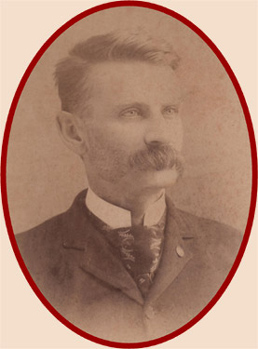
The friends and experiences James Lowell encountered during
his service with the '13th Mass' regiment had a profound impact on his
life. At the end of his enlistment Lowell went West, and had
a
series of adventures before he eventually settled in Holton, KS.
He wrote a memoir of his adventures which was never
published. Once settled, he went back east and married Kate Roberts, a girl he
met in Harrisburg, PA where he recovered from wounds received
at
the battle of Antietam. Lowell carefully preserved
his war legacy by keeping in touch with comrades and saving
the letters. He also kept a
scrapbook with photos of his former soldier friends.
Today his descendants continue to be stewards of the Lowell family
legacy. There is a good possibility that Lowell's yet
un-published 'Western Memoirs' will soon see the light of day.
Also, over 70 images of Lowell and his comrades were shared
with me for use on this website.
The following
letter to
Association Secretary Charles
Davis was printed in 13th Regiment Associaton Circular #23, December,
1910.
It recalls an incident that occurred when Co. A was detached
at
Hancock. A related incident is also told in the article "Dr.
Clark and the Rebel Flag" shown below, on this page.
Sergeant
Robert
Bruce Henderson of Company A is pictured.
Holton,
Kan., Dec. 9, 1909.
Charles E.
Davis, Jr.,
Boston, Mass.
Dear Comrades All:
I wonder how many survivors of
Company A remember the following incident, I have seen
nothing of it in any of the circulars. The impression it left
on my mind at the time has never moulted a
feather and I am tempted to relate it in my awkward way. In
the winter of 1861 three or four companies of
the regiment were sent to Hancock as part of the "Advance Guard."
Company A was quartered in a brand new brick
3-story house; the pony mess (to which the writer belonged) camped in
the low-ceiled attic. Now, as
Company A figured in the role of skirmishers of the regiment, a part of
our training was the bayonet
drill. One day a series of bayonet drills took place in the
attic, an arena wholly unsuited for that
character of warfare, and the result was that the ceiling looked like
one vast cane bottom for a chair, and the
lamentations of the Irishman who owned the property when he discovered
the casualties brought Sergeant Whiston
to the scene. Orderly Sergeant Whiston was a pretty good
detective, but he was clean off-scent in this
instance. The bayonet warfare of Company "A" did not end
here. On one of those delightfully fine days of
a Maryland winter, Bob Henderson (of cherished memory), then a sergeant
was ordered to bring out the company
for bayonet drill. For the occasion we were groomed to the
top notch-buttons glistening in the sunshine
we were proudly marched up street halting in front of a mansion whose
balcony above contained two Union
officers with a female between. One was a surgeon with rank
as major.
 With
bayonets fixed we got
to business, going through the manual with bugle calls. The
whole thing was so sudden and unexpected that
the vain pedantry of the performance did not at once get to our inner
consciousness, as it did later on.
Our distinguished audience on the balcony condescended to clap us
politely, and the show was going merrily on
when the bugle noted us to lie down, and down we went, immaculate
plumage, polished buttons, and all in
Maryland dirt. At once a voice - of a woman from the balcony
"see Lincoln's niggers." Instantly
Sergeant Henderson took a hand, and we were marched to our quarters,
where a discussion took place without the
formality of a chairman and secretary and in which the names of the
holy Trinity served to give emphasis.
We were not long in deciding what to do, and with Sergeant Henderson
for a leader we retraced our steps to the
mansion and going to the door the sergeant slammed the knocker; the
door presently opened with the major in
front, who demanded the sergeant's business. "I wish to speak
to the person who insulted these Federal
soldiers," said the sergeant.
With
bayonets fixed we got
to business, going through the manual with bugle calls. The
whole thing was so sudden and unexpected that
the vain pedantry of the performance did not at once get to our inner
consciousness, as it did later on.
Our distinguished audience on the balcony condescended to clap us
politely, and the show was going merrily on
when the bugle noted us to lie down, and down we went, immaculate
plumage, polished buttons, and all in
Maryland dirt. At once a voice - of a woman from the balcony
"see Lincoln's niggers." Instantly
Sergeant Henderson took a hand, and we were marched to our quarters,
where a discussion took place without the
formality of a chairman and secretary and in which the names of the
holy Trinity served to give emphasis.
We were not long in deciding what to do, and with Sergeant Henderson
for a leader we retraced our steps to the
mansion and going to the door the sergeant slammed the knocker; the
door presently opened with the major in
front, who demanded the sergeant's business. "I wish to speak
to the person who insulted these Federal
soldiers," said the sergeant.
Quoth the major.
"You can't cross this threshold except over my dead body,"
Behind the major stood the "person," who said. "Major, I will speak to
the sergeant." Then followed a
retraction of the offensive words and an apology, and thus disarmed we
returned to our quarters. The
incident was closed as to the "person" not so as to the
major. Our return was enlivened by repeated
"three groans for the dead body," that could be heard by the rebel
pickets on the Virginia shore. At the
foot of the stairway or entrance to our quarters was constantly kept a
guard or sentinel. This guard, as
part of his duty, was unofficially charged to announce the appearance
of the major whenever seen in the
vicinity. On one or two occasions this happened, and in each instance
we formed a line in double column on the
curb, and gave the major our complimentary salute, "Three groans for
the dead body." It was currently reported
that the major at his own request was relieved from further service at
Hancock. But before the major's
departure the woman took hasty leave, Her mission as a spy became by
this incident too plainly evident to admit
of doubt. She was not a resident, a palpable courtesan, and
her flight none too soon for her own good.
With best wishes to all,
JAMES H. LOWELL.
Roxbury
City Gazette; December 16, 1861
(Letter transcription taken from the now
defunct web-site "Letters of the Civil War").
Our Army Correspondence
Thirteenth Massachusetts.
Dec. 16,
1861.
Hancock, Md
Editor of the Gazette:
Dear Sir: – There is nothing
special to write about; two companies of cavalry passed through town
yesterday on their way to join Gen.
Kelley. The 39th Illinois regiment arrived here last night; I
don’t know, but I certainly think
they suffer by comparison with any Massachusetts regiment I have yet
seen. They have crossed the river,
and will act as picket guard on the Railroad; they are a hard
set of fellows, and are well armed, having
the Springfield rifle bore muskets – as fine a looking rifle as I have
ever seen. May they use them
on none but the enemies of the Union. I was much amused to
hear them growl about the long march they were
obliged to make. Only think, all the way from Williamsport to
Hancock; when they come to march sixty
miles with knapsacks on, then they can grumble to their heart’s
content, and no person will blame
them. Now they are here, the question is what is to be done
with us. Time will determine. We
are not needed here, for they will guard the Railroad for a distance of
? miles. I hope we shall return
to Williamsport, or if otherwise determined I hope the balance of the
regiment will come here, for at the
present time company H is at least forty miles, and company E
thirty-five miles from Williamsport, which latter
place you are aware is the Headquarters of the regiment.
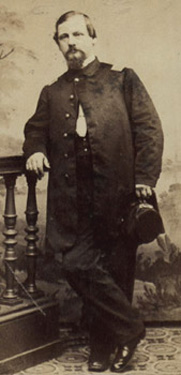 A
few evenings since some of the boys
became rather excited, on account of being called Lincoln’s Niggers, by
a somewhat high spirited specimen
of ?, a daughter of a prisoner warned away, drew upon her head the
wrath of our good old Bay State boys: they
complimented her one evening, uttering before her house certain
unearthly noises, resembling groans: they might
have gone farther had they not been checked by Capt. Fox, (acting Major
) he having satisfied them, they
quietly returned to their quarters. Capt. Fox, [pictured] of
company A
is one of the finest gentlemen I have ever
met, of a genial, kindly disposition, and his hand and heart work
together: all love and respect him.
Capt. Carey, Lieuts. Neat and Bush, are also gentlemanly soldiers. A
few evenings since some of the boys
became rather excited, on account of being called Lincoln’s Niggers, by
a somewhat high spirited specimen
of ?, a daughter of a prisoner warned away, drew upon her head the
wrath of our good old Bay State boys: they
complimented her one evening, uttering before her house certain
unearthly noises, resembling groans: they might
have gone farther had they not been checked by Capt. Fox, (acting Major
) he having satisfied them, they
quietly returned to their quarters. Capt. Fox, [pictured] of
company A
is one of the finest gentlemen I have ever
met, of a genial, kindly disposition, and his hand and heart work
together: all love and respect him.
Capt. Carey, Lieuts. Neat and Bush, are also gentlemanly soldiers.
There seems to be
some mistake or blunder
somewhere, about that skirmish of the 30th ult. Captain Pratt
was on the field, and company E’s
boys are not the ones to run. The only fault they have – if
fault it can be called – is that
they are too anxious to fight, without regard to odds against
them. I have no fears of company E or any
other company in the 13th regiment.
Hoping something will turn up soon to
interest both yourself and readers.
I remain
respectfully yours,
Roxbury,
{Digital Transcription by James Burton.]
Return
to Table of Contents
Reminiscences from the 39th
Illinois
The following is
taken from "The History of the 39th Regiment,
Illinois Volunteer Infantry" By Dr. Charles M. Clark, Chicago,
Illinois, 1889.
December 15th, 1861, the regiment broke camp and
departed for Hancock, Md.some sixteen miles distant, the camp and
garrison equipage being transported by canal-boat. It arrived at
Hancock on the following day, after bivouacking at
Clear Spring over night, and at once
crossed the Potomac river to Alpine Station, Va., having orders to
guard the Baltimore and Ohio railroad.
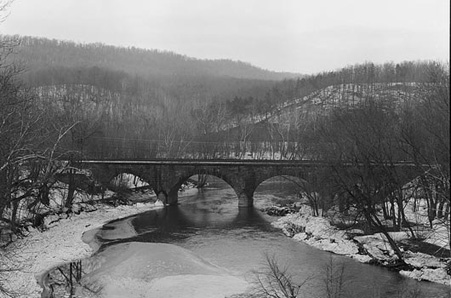 The various companies of the command were
distributed as follows: Companies A, B, C, and F at
Alpine Station and vicinity; Company E at Sir John's Run, six miles
distant up the road in the direction of
Cumberland; Company G, at Great Cacapon bridge, (pictured); and
Companies D, K, and I at Bath or Berkeley Springs, six miles in the
interior, back from the river. The
regimental headquarters were established at Alpine, taking possession
of the vacant house belonging to Johnson
Orrick,* then a member of the Confederate Congress, and who had removed
his family to Richmond. The hospital was
also established at this place. The Orrick mansion was spacious and
roomy; but nothing had been left behind to
facilitate the comforts of keeping house, being an exception to the
quarters found by the company officers at
Bath and other places. There was, however, good stabling for
horses, with plenty of hay and grain.
[Photo of the B & O bridge across the Cacapon River, early
1900's; Library of Congress].
The various companies of the command were
distributed as follows: Companies A, B, C, and F at
Alpine Station and vicinity; Company E at Sir John's Run, six miles
distant up the road in the direction of
Cumberland; Company G, at Great Cacapon bridge, (pictured); and
Companies D, K, and I at Bath or Berkeley Springs, six miles in the
interior, back from the river. The
regimental headquarters were established at Alpine, taking possession
of the vacant house belonging to Johnson
Orrick,* then a member of the Confederate Congress, and who had removed
his family to Richmond. The hospital was
also established at this place. The Orrick mansion was spacious and
roomy; but nothing had been left behind to
facilitate the comforts of keeping house, being an exception to the
quarters found by the company officers at
Bath and other places. There was, however, good stabling for
horses, with plenty of hay and grain.
[Photo of the B & O bridge across the Cacapon River, early
1900's; Library of Congress].
Alpine Station consisted of a few straggling
houses. The only family of any prominence left there was the Swan
family, made up of father, mother, and two
daughters—all pronounced rebel sympathizers. The old gentleman was such
a dyed-in-the-wool rebel that he
was accommodated with quarters in the calaboose over at Hancock in
charge of Captain Fox, who commanded a
detachment of the Thirteenth Massachusetts stationed there. One of the
daughters, Miss Fannie Swan, was no less
bitter in her hatred of the Yankees, and there was little reason to
doubt that she possessed among her other
accomplishments, that of a spy, and she was placed under constant
surveillance. The Western men found
considerable more favor in her eyes, however, than those from
Massachusetts, and at times she was disposed to
be most gracious.
The assistant surgeon of the regiment had
especially ingratiated himself, and she had so worked upon his
sympathies that he received permission from
Captain Fox to take her father home to spend Christmas day: and in this
way the doctor and a few others got a
solid dinner. But the doctor did not enjoy it overmuch, having to keep
the old gentleman in mind all the
time, being responsible for his safe return at a specified hour.
*Mr. Johnson Orrick (1832 -
1863) was a Captain in the 33rd VA Infantry, killed at the battle of
Morganstown, June 21, 1863. See also John B. Noyes
December 7th letter above.
Return
to Top of
Page
Dr.
Clark and the Rebel Flag
This
amusing story involving Captain 'Joe'
Cary of Comany B, comes from the annals of the 39th Illinois.
I'm grateful to fellow researcher Timothy
Snyder for bringing this volume to my attention.
In the latter part of November, 1861, while the
regiment was at "Williamsport, Md., Dr. Clark, then Assistant Surgeon,
was ordered to Hancock, Md., to attend
the sick at that post.
Two
companies of the Thirteenth Massachusetts Volunteers, under
the command of Captain Fox, being stationed there, the Doctor took up
his quarters with the other officers at
the hotel and was made comfortable. Through the courtesy of Captain
Carey,
(Capt. Joseph S. Cary, pictured) who was the
provost-marshal, he soon became acquainted with many
residents of the town, among whom was the family of Colonel Bowles,
consisting of the Colonel, his wife and
daughter, who were strongly Union in sentiment and very hospitable.
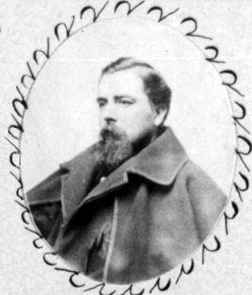 One
evening at a little social given by Miss Bowles, and where had gathered
quite a number of her young lady
friends, the Doctor met with a Miss Pendleton, from Berkeley Springs,
and also a Miss Fannie Swan, living at
Alpine Station, Va., across the river from Hancock. Miss
Pendleton, the
daughter of Dr. Pendleton, was a very
pronounced Union sympathizer, while Miss Swan entertained quite
different sentiments—in fact she had the
reputation of being a "little rebel." Her feelings had also
become somewhat intensified against the
"Yankees" from the fact that her father had lately been arrested for
his disloyal utterances, and was at this
time an inmate of the calaboose or jail. She scarcely noticed the
Massachusetts officers who were present, but
learning that Dr. Clark was a Western man, and not a detestable Yankee,
as she expressed it, from
Massachusetts, she laid aside some of her reserve and coolness of
manner and condescended to speak with him. One
evening at a little social given by Miss Bowles, and where had gathered
quite a number of her young lady
friends, the Doctor met with a Miss Pendleton, from Berkeley Springs,
and also a Miss Fannie Swan, living at
Alpine Station, Va., across the river from Hancock. Miss
Pendleton, the
daughter of Dr. Pendleton, was a very
pronounced Union sympathizer, while Miss Swan entertained quite
different sentiments—in fact she had the
reputation of being a "little rebel." Her feelings had also
become somewhat intensified against the
"Yankees" from the fact that her father had lately been arrested for
his disloyal utterances, and was at this
time an inmate of the calaboose or jail. She scarcely noticed the
Massachusetts officers who were present, but
learning that Dr. Clark was a Western man, and not a detestable Yankee,
as she expressed it, from
Massachusetts, she laid aside some of her reserve and coolness of
manner and condescended to speak with him.
In the course of conversation the rebel flag was
mentioned, and Dr. Clark remarked that he had not yet seen the flag of
the Southern Confederacy, but would much
like to see it for curiosity's sake, if nothing more; and gaining some
confidence from his affable reception
and her obliging mood, made the request for a miniature copy of one.
Miss Swan replied that she would be much
pleased to accommodate, but owing to the present status of affairs in
her family she dare not undertake such a
thing, but that Miss Pendleton, her cousin, would doubtless be pleased
to bestow the favor, as her sympathies
with the Union cause were well known, and if the Doctor desired she
would ask her.
Nothing more was thought of the matter for some days, when an
envelope was handed to the Doctor by a colored man, who said that he
had brought it from Berkeley Springs and
was told to hand it to "Doctah" Clark with the compliments of Miss
Sally Pendleton. On opening the envelope
there was found a small Confederate flag very tastefully made from
pieces of ribbon. It was about three inches
long by two inches in width, and very pretty. The Doctor
placed it
carefully in his pocket, with no suspicion
that any person was informed of this little transaction other than the
two ladies and himself.
Two days subsequently Captain Carey suggested that
they invite ladies and take a horseback ride. He said that he
had
already spoken to Miss Bowles, who had
consented, and that she had expressed the wish that the Doctor invite
Miss Swan. This was done, and the answer
being favorable, the party started off that afternoon up the river to
visit some mountain scenery near Sir
John's Run. Everything passed off very pleasantly and gaily until they
had entered the town on their return and
were passing the quarters of a company of the Massachusetts men, who no
sooner saw them than they ran out
shouting and jeering and behaving in a most shameful manner, calling
Miss Swan a rebel and passing other
insulting remarks. No attention was paid to them at the time,
but
quickening their pace, the party passed on to
the residence of Colonel Bowles, where they dismounted.
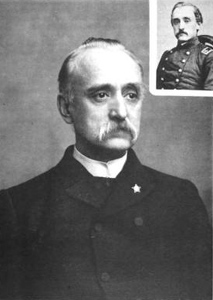 Captain Carey was
much
ashamed and exasperated at the conduct of his men, and left the house
almost immediately for Captain Fox's
headquarters, leaving Dr. Clark behind. The Doctor endeavored to
apologize for the rudeness offered to the
ladies, but was interrupted almost at once by Miss Swan, who said that
it was not at all necessary, for it was
nothing more than might be expected from a lot of abolition boors from
Massachusetts. Captain Carey was
much
ashamed and exasperated at the conduct of his men, and left the house
almost immediately for Captain Fox's
headquarters, leaving Dr. Clark behind. The Doctor endeavored to
apologize for the rudeness offered to the
ladies, but was interrupted almost at once by Miss Swan, who said that
it was not at all necessary, for it was
nothing more than might be expected from a lot of abolition boors from
Massachusetts.
Scarcely half an hour had passed when the sound of
fife and drum was heard, and looking down the street there was seen a
company of soldiers approaching, in
command of a Lieutenant. They halted in front of the house and were
brought to a front-face, grounded arms, and
stood at "parade rest," and the Lieutenant advanced to the door. It was
opened by a servant, who soon announced
that Colonel Bowles was wanted. The ladies present were very much
frightened and excited. Mrs. Bowles went to
the door, however, and stated that Colonel Bowles was at Hagerstown,
but would return during the evening, and
wished to know what was wanted. The Lieutenant replied that it had been
reported that there was a rebel flag
concealed in the house, and that he had been ordered to come and demand
it; and if it were not given up, to
search the house, and place the inmates under arrest. Mrs. Bowles made
reply that there was no rebel flag
concealed anywhere about the house or premises, and never had been; and
what was more, she considered it to be
a great outrage and a most unwarrantable proceeding on the part of any
one to discredit the well-known loyalty
of Colonel Bowles and his whole household. She then called
the Doctor
to the door. He responded at once, and
was told what was wanted.
"What!" said the Doctor, "you bring a company of some sixty men here on
the silly pretext that there is a rebel
flag concealed in this house! You must be a fool! and those who sent
you." [Dr.
Charles M. Clark, 39th Ill. pictured].
"Well, well!"
says Mrs. Bowles, who saw that trouble was brewing, "let
the officer search the house, if he wishes, and be satisfied; but I
know that if the Colonel were home it would
not be permitted."
The Lieutenant
said that he must obey orders, however unpleasant it
was; and calling for a sergeant and file of men they proceeded to make
the search.
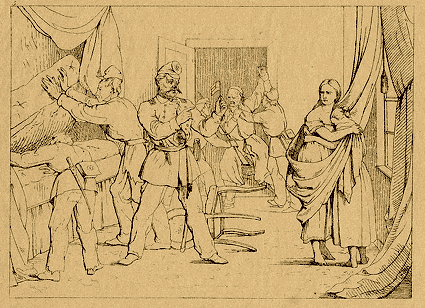 About this time it occurred to
the Doctor that
perhaps the little rebel flag that was yet in his pocket might have
some connection with this affair; but he
awaited the result of the search. The Lieutenant and his men soon
returned from the apartments upstairs, where
they had not found anything, and were proceeding to
other portions of the house, when the Doctor, calling
the Lieutenant out on the porch, and in the presence of the soldiers
and the crowd of citizens that had
assembled, said perhaps he could explain the whole matter; and taking
from his pocket the little rebel flag
mounted on something like a match-stick, he flung it to the breeze with
the remark, "Is that what you're
after?" and tried to explain matters; but amid such shouts of
derision at the abashed flag-hunters, that
it was impossible. The feather in the Lieutenant's hat fairly wilted as
he ordered his company to "Shoulder
arms! Right face! By the right flank, forward, march!" and he with his
brave command slunk away. About this time it occurred to
the Doctor that
perhaps the little rebel flag that was yet in his pocket might have
some connection with this affair; but he
awaited the result of the search. The Lieutenant and his men soon
returned from the apartments upstairs, where
they had not found anything, and were proceeding to
other portions of the house, when the Doctor, calling
the Lieutenant out on the porch, and in the presence of the soldiers
and the crowd of citizens that had
assembled, said perhaps he could explain the whole matter; and taking
from his pocket the little rebel flag
mounted on something like a match-stick, he flung it to the breeze with
the remark, "Is that what you're
after?" and tried to explain matters; but amid such shouts of
derision at the abashed flag-hunters, that
it was impossible. The feather in the Lieutenant's hat fairly wilted as
he ordered his company to "Shoulder
arms! Right face! By the right flank, forward, march!" and he with his
brave command slunk away.
Captain Carey soon appeared, but was totally
ignorant of how the whole affair originated. Suitable apologies were
made to Colonel and Mrs. Bowles, and the
affair was soon forgotten by them, but the Massachusetts men never
could look pleasantly at the Doctor
afterwards, who was a most unwitting character to the whole proceeding,
and has often questioned if it was a
joke! and if so, on whom. [The
illustration, is by Adalbert Volk, of Baltimore. It comes
from Treasures of the New York Historical Society,
American Memory/Library of Congress website].
Return
to Top of
Page
Warren H. Freeman Joins the Regiment
Warren
H. Freeman mustered into the '13th
Mass,' Company A at Williamsport December 1st 1861. After the
war his father published in 1871 "Letters
From Two Brothers Serving in the War For the Union To Their Family at
Home." The book chronicles the
military career of Warren and his brother Eugene. (A fine
photographic portrait of Warren accompanies the
book, but I have only found this poor digitized reproduction.
I would be grateful to anyone who could
provide me with a better image.) In the following letter
Warren describes some of his new experiences,
including participation in the fight at Dam No. 5 of the C & O
Canal. See my link from the 1861 page
for more information on that fight.
Hancock, Md., December 21, 1861
Dear Father
and Mother, - I arrived at
the headquarters of a detachment of the Thirteenth
Regiment Mass. Vols., on the third day, after leaving home on the 1st
inst., and have joined Company A, Capt.
James A. Fox. We are quartered in quite a nice brick house,
about as handsome as any in town. There
are about seventeen men in each room, which makes it rather crowded
nights; we sleep on the floor, but I
like that as well as a bed now, although it took hold of the hip bones
a little at first.
 I went
down to Williamsport last Tuesday, a
ride of about twenty-six miles, and returned last night.
There was great excitement there the first night
after I arrived; messengers came up from Falling Waters (a small town
about five miles below on the river)
every few hours, with news that five thousand rebels were crossing in
boats. The men in Williamsport
packed up their goods and sent the women and children all out of
town. There was some fighting, but it
did not amount to much. I have got a piece of shell sent over
by the rebels. I went
down to Williamsport last Tuesday, a
ride of about twenty-six miles, and returned last night.
There was great excitement there the first night
after I arrived; messengers came up from Falling Waters (a small town
about five miles below on the river)
every few hours, with news that five thousand rebels were crossing in
boats. The men in Williamsport
packed up their goods and sent the women and children all out of
town. There was some fighting, but it
did not amount to much. I have got a piece of shell sent over
by the rebels.
On Thursday I
had my first sight of the
rebels. We heard considerable firing early in the
morning, so a few of us started on foot for Dam No. 5, a distance of
about seven miles up the river; we reached
there a little after noon. The rebels were trying to destroy
this dam with artillery, which, if they
could, would stop navigation on the Chesapeake and Ohio
Canal. This is the place where the fight took
place a few days since, when one of our men was wounded in five
different places; he is living and likely
to recover; his name is James Kenny, a Boston boy. When we
arrived we found our cannon had driven the
enemy off, or most of them: there were a few of their pickets
left, who were on the side of the hill
which rises quite abruptly up from the river; they continued to fire
upon us, while our men returned the
compliment. I had the satisfaction of firing a few shots at
them, with what effect I do not know, but two
or three of their balls came whistling quite near my head.
Our two pieces of cannon shelled a very large
mill on the opposite side of the river. The rebels used to
get in there and fire out of the
windows: it made a very good fort, the main part being of
stone, and about six feet thick at the
bottom. We could not set it on fire with shell, so five men
went over in a boat and burnt it; it
made a splendid fire.
These dams
are built across the Potomac,
and raise the river so that it fills the canal; if
they should break this dam it would let the water down some ten or
twelve feet, and of course stop navigation
on the canal.
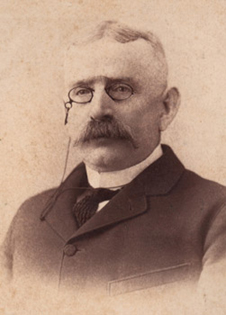 Well,
I have
“smelt gunpowder,” and been
“under fire,” and “roughed it” with the army long enough to judge a
little what a
soldier’s life is, and certainly it
is a hard one, yet I think I can stand it, and must say I like it
pretty well. Well,
I have
“smelt gunpowder,” and been
“under fire,” and “roughed it” with the army long enough to judge a
little what a
soldier’s life is, and certainly it
is a hard one, yet I think I can stand it, and must say I like it
pretty well.
I have seen
many of the regiments in
Banks’s Division, but none equal to the famous
Thirteenth Mass. Rifles. Our Colonel Leonard is very popular,
and his regiment is quite full; we have one
hundred and two men in Company A. Some of the men, a few days
since, crossed over to the “sacred
soil” on a foraging expedition; I intended to have been among the
number, but missed the chance by being
off hunting in the woods after partridges, etc., at the time.
They were quite successful, bringing back
several wagon loads of spoils, such as pigs, turkeys, geese, potatoes,
corn, etc., and a live peacock.
Dyer (you remember Dyer, he was in the West Wind with Eugene) got a lot
of secesh money. I inclose to you
some of this trash and a peacock’s feather. I do not think of
anything more to interest you, so
farewell.
Warren H. Freeman
NOTE: Dyer is
N. M. Dyer, [pictured] Co. A, transfered out of the infantry into the
Navy in 1862. He retired an admiral
in the US Navy. Dyer must have sailed with Warren's brother
Eugene, before the war. Eugene Freeman was in the US
Transport
Service during the Civil War.
Return
to Table of Contents
The
City of Hancock; Town Life & New Years Eve
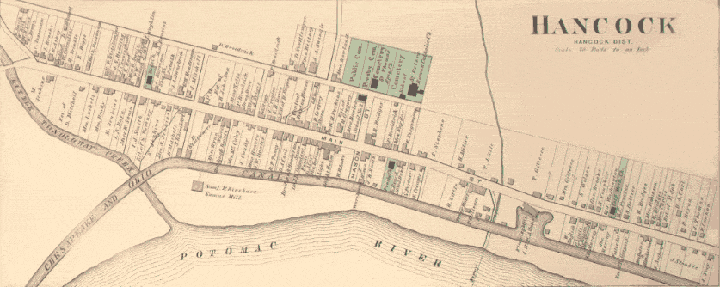 This map shows the plan and residents of the town of Hancock, 1877,
little changed from Civil War days. The churches are outlined
in
green. Many of the residents and places mentioned in the
letters
found on this page, the Presbyterian Church, the Methodist Church, The
Henderson Mansion, etc., can be located on this map.
Click
the image for a larger view.
This map shows the plan and residents of the town of Hancock, 1877,
little changed from Civil War days. The churches are outlined
in
green. Many of the residents and places mentioned in the
letters
found on this page, the Presbyterian Church, the Methodist Church, The
Henderson Mansion, etc., can be located on this map.
Click
the image for a larger view.
The letter
below comments on the extensive troop movements in the area
around Hancock, and a bit about life in town.
Roxbury
City Gazette
Letter from the
13th Regt.
December
22, 1861.
Sir John's Run, Va.,
December 22d, 1861.
Mr. Editor: –
Nothing has occurred since my last to change the monotony
of camp life. Everything remains quiet at this
place. This is Sunday evening, but one would hardly know it
by any movement that he might see out of doors; it is so still–not much
like a Sunday at home, with the bells ringing for church and the people
crowding their way through the streets to their different places of
worship. There is no church in the place, but the services
are held in the little school house once a fortnight. The
parson here has a wide field for his labors. The people in
this section of the country are mostly Methodists, and as they tell me,
their church at this time is in a very critical condition, as the
northern people of that denomination are against slavery, and the
Southern part are for it. The people of the Church in this
part of the country claim that they are the church proper, and that the
others have seceded from them, and have left them small in numbers and
poor in purse. How they will finally end, time and the end of
the war will only determine.
War news at this
point is rather dull.
Since the Government
has finished the railroad to Hancock, they have been passing troops
over the road in large numbers. Some come from Western
Virginia down, and go towards Washington, and some come from below and
go up; and it would puzzle a Philadelphia lawyer to tell what in the
world they are trying to get through them. But I suppose the
leaders know, and of course it is none of our business; although like
all the rest of Yankees we would kind of like to know.
We have been
stationed on the north bank of the
Potomac, and last week
the Illinois regiment, which has been at Hancock under Col. Leonard,
came up and have been sent across the river, all along opposite us and
on the line of the railroad, so that we have a double row of sentinels
all along here for about ten miles. What this is for I am at
a loss to tell.
As you have seen by
the papers, our boys below at dam No. 5, have had
some little fun, and I rather think Col. Jackson, the rebel commander,
with his large force, found Col. Leonard wide-awake for him.
Our troops in this
neighborhood are gradually working into Dixie, and
to-night some of them are quartered where, two weeks ago, the rebels
were. At that time they were planning a way to finish the
destruction of the railroad; and now it is re-built, and our troops are
here to take care of it. Thus, the world goes–first the dog
is ahead, then the fox.
It is a very
disagreeable, stormy night, with signs of snow before
morning; but I hope it don’t come just yet, not until we get a little
farther down in Dixie. The boys, with a few exceptions are
well and in tip-top condition. Our friend, George S. Chenney,
is out and walking around, and in a few days will rejoin the company.
How long we shall
remain here, I do not know, but we are in hopes not
long.
Yours,
ROCKET.
Hancock, Md.,
Dec. 23, 1861.
Editor of the Gazette
Dear Sir:
– Last Saturday one of those events, common, but none the
less painful occurred,–the death of a member of the Illinois
Regiment. He placed himself in one of the wagons when at
Clear Spring, but owing to some oversight, was forgotten on the arrival
of the team at Hancock; he was finally found nearly dead when the time
came for loading the wagon; he was removed to comfortable quarters, but
too late to benefit him. I attended the funeral.
The services were conducted by the Rev. Mr. Lee. Three
volleys were fired over the grave by his companions in arms, after
which we slowly left the grave feeling a solemnity if possible more
than common, owing to the time, place and circumstances of his death
and burial.
Last Sunday was cold and chilly–rain and hail in the evening, and
Monday evening found the ground covered with snow, rendering travelling
very disagreeable. The weather at this time strongly reminds
us of home. Winter has set in as the folks out this way
remark, and now you boys must look out for squalls. I must
say that under present circumstances I dread it; there must be much
suffering among the troops, increasing largely the army
mortality. It may be a necessary evil, but it can by
judicious management be greatly lessened. Such I trust may be
the case.
I have often heard it stated that Whiskey was a bane to Southern
people; such may or may not be the case; that there is a large amount
of the article drank is true,–that in many instances it is carried to
excess, is also true. When the country people come into town
on Saturdays, to do their shopping–a day seemingly devoted to the
purpose–then may be found those who drink to excess. I have
seen quite a number troubled with a weakness in their knee joints; this
state is generally perceptible at the time when the sun is getting low
in the heavens, but as most of those so troubled have horses and are
good riders they manage to get along quite nicely. I do not
think the people as a whole are say more given to strong drink than are
the people of Massachusetts; they are generally hospitable in their
nature, and think it no harm to ask the stranger at their fire side to
take a smile.
The Maine 5th regiment camped one mile from Hancock yesterday, they
will probably cross into Dixie. Our detachment still remains
here; the Illinois 39th are stationed opposite–their pickets extending
to Orleans, a distance of twenty miles. They have also two
companies quartered in Bath. Picket duty is an important duty
here, as the railroad extending from here to Cumberland must be kept in
running order. Should anything special take place, I will
keep you informed.
-
Dec. 25th.
The first thing which greeted my eyes this morning is a Battery of six
pieces of artillery from Romney. They are about crossing the
river, supposed to be destined for Washington. They are fine
looking troops, and apparently able to take care of an equal number of
rebel troops. The Illinois regiment mentioned yesterday, are
certainly the hardest looking set of men I have yet seen.
Many of them I regret to say were under the influence of something very
potent – bad whiskey I suppose. One man attempted to shoot
another, but fortunately missed him, although endangering the life and
limbs of passers by. Another passed me, whose head was
severely damaged by coming in contact with the butt of a
rifle. A guard is stationed in all the hotels, also at other
places where liquor is sold, and no soldier can obtain the poison
unless well posted. Citizens are allowed to drink, and
occasionally they smuggle in a wearer of the uniform.
There seems to be a great defference paid to religious worship in
Maryland. Each body or denomination clings to its own
peculiar views with a tenacity which New England itself, with all its
isms can’t surpass; yet while still clinging to individual views, there
seems to be an innate virtue which casts out the spirit of
contention. The spirit of the Gospel seems to be carried out
more fully, more complete that I have ever seen it. Its
influence upon the minds of the people is of that character which leads
them to look to their spiritual adviser without entering into the
bewildering mazes of an argument, the end of which has not yet been
reached. Each one seems to regard the Gospel as glad tidings
of good news, and each one seems to be striving to strain that point of
religious experience which will not only prove a benefit to himself but
to those around him. The Episcopal Church of Maryland seems
to be strongly pervaded by a Union loving spirit. The St.
Thomas Protestant Episcopal Church on High street, numbers some forty
communicants and has regular services twice each Sabbath; they also
have evening services. Its meetings are fully attended, and
its pastor, Rev. Mr. Lee, is a most uncompromising friend of the Union,
a gentleman, a scholar, a warm hearted friend.
The Methodist and other churches are in good condition and well
attended. A majority of the boys of course prefer the
Methodist; I listened to a sermon last Sabbath evening, and must
confess I never saw the gentry with horns and clump foot so roughly
handled. Served him right; he has no business in
Maryland. The blacks have a church out of town.
The war news seems to have little effect upon the troops; if England
wishes to turn our present troubles to her own account, let her do
it. The limited monarchy of England will sustain such a shock
as she never received should she meddle with America in her time of
calamity. The final result must be to her not only the loss
of her dependencies, but the loss of her nationality. If she
sows to the wind she will reap the whirlwind.
A dark cloud seems to hang over us, but the sunshine of a righteous
cause will soon dissipate its shadows, and the fullness of freedom will
illuminate the land.
Respectfully
yours.
Roxbury.
(Roxbury City Gazette; January 2, 1862; pg. 2,
col. 7.)
Letter
of John B. Noyes, New Year's Eve in Hancock

Although John Noyes was back in Williamsport when he penned this letter
to his sister, the content centers around the social life among
Hancock's leading residents. About the Henderson family John
wrote his brother Charles "I have no better friends anywhere
than
those there made. Indeed I was almost a part of Mr
Henderson's
family. His wife and Children treated me as a relation and I
exerted myslef to make them as happpy as they made me. At
their
house I made many friends, at whose houses I was always welcome to eat,
meet & to sleep. There I made taffy, egg nog,
& myself at
home. Even their children, 2, 6, & 8 years old
respectively,
were excellent company, much better than that of some young ladies I
have met in the course of my life."
Pictured at right is Mr. Charles Wilson Henderson, prominent citizen of
Hancock. His wife Jane Catherine, a very beautiful woman of
the time, was from the Brosius family. She is
pictured in the body of
the letter below. The families mentioned in Noyes' letters,
the Kirk's, Hendersons, and Brosius families, were all related through
marriage. The Henderson Mansion once stood in town.
The Kirke Mansion in Pennsylvania is also gone. In
2012 I visted the sites where these houses once stood and looked down
the roads John Noyes walked to get to one or the other. The
road to the Kirke's is intersected today by a freeway, and no longer
goes through.
MSAm 2332
(25a). By Permission of the Houghton Library, Harvard
University.
Williamsport
Md. January 4, 1862
Dear Martha
My last
letter home, dated Dec 31st was sent to Aunt Rebecca. This
letter may be considered as one answering yours of the 26th ult, and
Fathers of the 31st.
You
perceive I am
again at Williamsport
after an absence of about 5 weeks and a half. On the 2d inst
Co’s. A & B at Hancock, and Cos. H & E which were
respectively at Orleans & Sir John’s Run came down the canal by
boat to this place. We passed Dam No. 5, Four locks, Etc. but
were not fired upon by the enemy. They probably had no
information of our purpose. We put up for the night, my
company, at our old barracks in the town, but were ordered to start for
the camp the next morning. Arrived at our Company street the
scene was anything but enchanting. Fire had been applied to
the straw left in our tent grounds and the stakes all round the tents
had been burned. Add to this the embankments had to some
extent been thrown down. The ground was frozen hard, and the
prospect of refitting our tents and rendering them habitable was not
promising. Nevertheless by dint of hard labor we succeeded in
making our tents nearby as comfortable as before. The frost
was not more than four inches deep and the ground was soon turned
up. Stakes were made, the tent pins fixed in the ground,
straw stuffed between pins and stakes, bank made anew, nice straw for
bedding brought, stove re-erected; in short our habitation was
completed. At night shortly after our work was finished, snow
began to fall fast & the ground was soon covered with a white
mantle. This morning but an inch or two of snow lies upon the
ground. Every thing looks bleak without & there is
little outside of the tent to attract us. With the stove
before us, warm as I want to be, the tent seems more comfortable than
the barracks at Hancock. There is a difference however. There
we had the freedom of the town & seemed least at home when in
barracks. Here there is no society, no exchange; we are
simply at home.
Ten of
our company
were detailed for guard
this morning, but were dismissed at guard mounting. This looks as if we
were to do no guard duty here. I mean our company
alone. The Provost Guard in town & a detachment from
our Co. do all the guard duty that is required from the whole
company. Without guard duty I do not see why wintering here
may not be quite endurable. We can easily keep warm &
shall have little to do. Were we only allowed to go to
Williamsport when we pleased we should be satisfied. Whether
we are to stay here any length of time cannot be told. The
Col. it is said does not advise the soldiers to lay much money out on
the tents; and it is rumored with some degree of probability that the
whole of Co. B is to return to Hancock. But amid the
numberless
rumors
daily set a going by Chaplain, sutler, and eves droppers of every sort,
who shall select one as more probably than another ? The
principal reason I have for thinking we may go back to Hancock is that
it is about the only place our Company has not returned to after
leaving it as we supposed for good. Fates would therefore point to
Hancock. If we were to be sent back to Hancock I should be resigned to
the change. My last days in Hancock were passed quite as
pleasantly as the first. In fact I may be considered as
having had a six weeks vacation, with just enough to do to keep my hand
in. Toward the last we had no drill or dress
parade. In the morning we answered to our names and looked
out for the guard detail. During the day we stayed in
quarters, or discussed the news at the various stores about
town. Little did we seek the eve’g roll call if we
wanted to be elsewhere than in quarters. Little did we care
for “taps” either.
Thursday Evening the
31st, New Year’s Eve,
was the occasion for a taffy party at Mr. Hendersons. I had a
hand in making the egg nog myself, as also the taffy, and it was none
the worse for that. We played different games, among them
blind man’s buff & crooked pear tree. At Eleven
o’clock I was obliged to leave to stand guard from eleven to one at
Post 5, a bridge which leads out of the town. My friends came
down to see me during the night, and supplied me with cigars of
course. I watched the old year out & the new year
in. Seated before a comfortable wood fire I deemed it no
hardship to be on guard from eleven o clock at night Dec. 31st ‘61 to 1
Am Jan’y. 1, 1862. I thought of Cambridge & wondered
if any daring Sophomore was dancing around the Rebellion tree to keep
the ancient custom. Here abouts a great many people see the new year in
especially the Methodists who have what is called a watch
meeting.
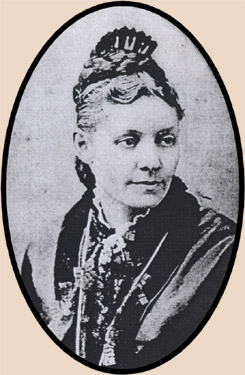 A great many people
were about town, &
I was
scarcely left alone at my post for a moment. The New Year
rose warm to greet us; mud in the streets ere long to be dried up by a
driving wind. A happy new year you were probably wishing all
your friends, I wished “New Year’s gift” to those I wished to
catch. I did’nt know but Mothers was “a merry new year” to me
far away from home in order to balance the “happy Christmas” she sent
me in her last letter. I had a happy Christmas and a merry
new year. The new year merry in spite of the fact that I was
to leave warm friends on the next day. I came off guard at 9”
Am, and laid my plans for the spending of the day. I proposed
to dine in Pennsylvania, at Kirke’s, sup in Md. & Penn. at the
Brosius’s & close the day at Henderson’s; but as fate
would have it I received a note from Mrs. Henderson requesting Sanborn,
Chandler and my humble self to take “high tea” with her. This
invitation was not to be disregarded. I accordingly was
obliged to decline the pressing invitations I received to dine in Penn.
and reached town at 3 o’clock just in time to go to “high
tea." High tea here is equivalent to a tall dinner, and at
the table of course all the luxuries of all seasons were bountifully
dispensed. Lieut. Johnson of the 39th Ill. & Mr.
Miller the telegraph operator over the river were at dinner who
afterwards enlightened us somewhat on military movements. I
intended to spend the Eve’g. at the Brosius’s, but as Miss Mary
& Johnny Brosius were at Henderson’s I concluded to accept Mrs.
Henderson’s invitation to spend the Eve’g there. Accordingly
I went to the barracks and packed my valuables in readiness to march at
4 o’clock the next morning. I found at Mrs. Hendersons on my
return Army (Armistead) & Bob Zwingle, Alph Byers, J.
Brosius, Misses Brosius, Kirke, Thomas & the two Miss Byers
“right pretty girls I reckon. With Chandler and Sanborn we
formed a very cozy party. Great was the fun we had playing
blind man’s buff. Right excellent was the egg nog we
drank. One of the ladies gave me a Philippine almond. Neither
she nor I could get caught at the entertainment til as “we were leaving
I innocently offered her my arm which she took. “Philippine”
I of course remarked. A great many people
were about town, &
I was
scarcely left alone at my post for a moment. The New Year
rose warm to greet us; mud in the streets ere long to be dried up by a
driving wind. A happy new year you were probably wishing all
your friends, I wished “New Year’s gift” to those I wished to
catch. I did’nt know but Mothers was “a merry new year” to me
far away from home in order to balance the “happy Christmas” she sent
me in her last letter. I had a happy Christmas and a merry
new year. The new year merry in spite of the fact that I was
to leave warm friends on the next day. I came off guard at 9”
Am, and laid my plans for the spending of the day. I proposed
to dine in Pennsylvania, at Kirke’s, sup in Md. & Penn. at the
Brosius’s & close the day at Henderson’s; but as fate
would have it I received a note from Mrs. Henderson requesting Sanborn,
Chandler and my humble self to take “high tea” with her. This
invitation was not to be disregarded. I accordingly was
obliged to decline the pressing invitations I received to dine in Penn.
and reached town at 3 o’clock just in time to go to “high
tea." High tea here is equivalent to a tall dinner, and at
the table of course all the luxuries of all seasons were bountifully
dispensed. Lieut. Johnson of the 39th Ill. & Mr.
Miller the telegraph operator over the river were at dinner who
afterwards enlightened us somewhat on military movements. I
intended to spend the Eve’g. at the Brosius’s, but as Miss Mary
& Johnny Brosius were at Henderson’s I concluded to accept Mrs.
Henderson’s invitation to spend the Eve’g there. Accordingly
I went to the barracks and packed my valuables in readiness to march at
4 o’clock the next morning. I found at Mrs. Hendersons on my
return Army (Armistead) & Bob Zwingle, Alph Byers, J.
Brosius, Misses Brosius, Kirke, Thomas & the two Miss Byers
“right pretty girls I reckon. With Chandler and Sanborn we
formed a very cozy party. Great was the fun we had playing
blind man’s buff. Right excellent was the egg nog we
drank. One of the ladies gave me a Philippine almond. Neither
she nor I could get caught at the entertainment til as “we were leaving
I innocently offered her my arm which she took. “Philippine”
I of course remarked.
 The party
broke up about midnight I afterward went to Henderson’s store where
Zwingle sleeps and had my cigar case filled up to last for the
morrow. There is no end to Hancock hospitality so far as I am
concerned. I said some time ago that I was very near going
out after a slave. The circumstances were this.
Perry, a smart boy about 20 years old who had done nothing of any
consequence for two or three years was about to be hired out by Mrs.
Brosius. He concluded to run away & was obliging
enough to take her best horse with him. The folks wanted the
horse but did’nt care much for the contraband. Johnny Brosius
was going after the horse & Perry, if he should be with the
horse. Having the worst post of all, and a night one at that I did not
attempt to get any body to take my place. Chandler blest with
a better post exchanged with another and went on the expedition. He was
gone two days, found the horse, and brought it back, riding nearly 40
miles the last day. The slave was not thought worth spending
any money in catching. He had always been tenderly treated. I
suppose however he wanted his freedom, & he got it. The party
broke up about midnight I afterward went to Henderson’s store where
Zwingle sleeps and had my cigar case filled up to last for the
morrow. There is no end to Hancock hospitality so far as I am
concerned. I said some time ago that I was very near going
out after a slave. The circumstances were this.
Perry, a smart boy about 20 years old who had done nothing of any
consequence for two or three years was about to be hired out by Mrs.
Brosius. He concluded to run away & was obliging
enough to take her best horse with him. The folks wanted the
horse but did’nt care much for the contraband. Johnny Brosius
was going after the horse & Perry, if he should be with the
horse. Having the worst post of all, and a night one at that I did not
attempt to get any body to take my place. Chandler blest with
a better post exchanged with another and went on the expedition. He was
gone two days, found the horse, and brought it back, riding nearly 40
miles the last day. The slave was not thought worth spending
any money in catching. He had always been tenderly treated. I
suppose however he wanted his freedom, & he got it.
We got
our
army blankets a few days ago. Mine weighs 5 pounds & 5
ounces. I now sleep very comfortably. Mother wants to know if
the lost dog has been found. Indeed she thinks dogs not as much out of
place after all in a camp. Perhaps not, but some people would
think them more limited for private families. Father will not
renew my subscriptions for the New York World. The news is old before I
get it. My package went sour??? ago by Adam’s express. It
left Hagerstown Dec. 31st & goes to Cambridge direct. It is
sent express paid. I had not heard that Haskell was settled
at Salem. Whose church is he settled over ? Is it a
desirable parish ? I have heard Foote so little that I cannot
say I am surprised even at this call to King’s Chapel. He is
universally liked, and I am rejoiced at his success, though I do not
know whether he judged well in accepting so arduous a post at the
commencement of his ministerial career. He is cautious and doubtless
knows very well what he is doing. I have no doubt he can
conduct the liturgical service in a manner more creditable to human
nature than any minister of the church in Boston. I hope he
may show his semi-episcopal hearers how impressive the liturgy is when
properly conducted. I trust he may show the people of Boston
the beauties of the liturgy, and the beauties of a pure &
rational faith. Congratulate him for me on his enviable
success.
I am glad
to hear mother is improving so much in health. I always
thought she worried too much about me and you and I don’t know but my
absence from home has had a good effect on her. Now that she
is so well, she must write a whole letter to me occasionally.
Tell father he need not buy me a rubber blanket. I want you
to make me a nice thick pair of mittens with a fore finger
attached. Cousin Sophia offered to make me a pair but perhaps
you would prefer to. I want them very heavy & long
wristed. These mittens and my scarf can be sent at a fitting
opportunity. How does Charles do ? I haven’t heard
from him lately. Do you ever ride in his buggy ?
At the
end
of this long letter I have little room for your trip to
Lowell. Do you know whether Cor’t Welles is to have a Major’s
commission in his Regiment. I understand he is first Captain
with a good chance for it. You didn’t tell me much about your
trip, where you went, whom saw, what they said. Why not
? I should have liked to have been at the dramatic
entertainment at Mechanic’s hall. My regards to friends.
With love
to all Your Aff. Brother
I send you a
shinplaster. John B.
Noyes.
Return
to Top of Page
Letter
of Warren Freeman;
The Journey by Canal Boat Back to Williamsport

This house sat along the
canal at milepost 123 in
Hancock. Originally a one story structure it sat on a hill
overlooking the Potomac when the canal was built in 1839. In
1875
the Bowles family, mentioned in Dr. Clark's article, acquired the
property and lived here for nearly 4 decades. Today the
building
is the Hancock Visitors Center for the C&O Canal Park.
-Information
from the NPS website. I took this picture on a
chilly
February afternoon in 2012, with snow-flurries about, similar
conditions the soldiers of the 13th Mass weathered at about the same
time 150 years earlier.
Letter
of Warren H. Freeman, From
Hancock to Williamsport by Canal Boat

Another
photo from the Biscoe Brothers; - Canal Boat Moving East on Cumberland
(C&O) Canal. The Pike is on the extreme left.Taken
August
8th, [1884] 5:35 p.m.
Williamsport, Md., January 4, 1862
Dear
Father, - Our
detachment, consisting of
companies A, B, E, and H, left Hancock January 2d, at ten o’clock A.M.,
in two canal-boats, and arrived here at eight o’clock in the evening;
had a pleasant trip down the canal; the weather was rather cold, though
the sun was out clear; we made the twenty-six miles without any serious
accident; four or five of the men, while fooling and trying to jump on
shore, fell into the water. One man made a jump from the
stern of
the boat and struck the edge of the tow-path, lost his balance, and
made a back somersault right into the canal; he looked comical, I can
assure you. Another man lost his rifle in the canal and could
not
recover it again. We passed old Fort Frederick: this is quite
a
large fort, and was built during the Revolution, I think.
Arriving at Dam No 5, we expected an attack from the rebels, as at this
point we leave the canal, enter the river, and pass a point of land,
then enter the canal on the other side. Although our boats
were
very much exposed, the enemy did not attack us. This is the place where
the fight took place alluded to in my last letter. We landed
and
visited the contested ground. I counted twenty holes made by
shells in one brick house, so you will judge the fight was rather
severe, but we did not lose a man. Judging from the newspaper
accounts of what is going on here, you must think the rebels have not
allowed us much rest since I wrote last. Hancock, Dam No. 5,
“and
the d----d Thirteenth” (as the rebels style us), are objects of their
especial hatred; and Dam No. 5, they say, they are bound to destroy yet.
My
previous knowledge
of canal-boating, as
you are
aware, was in the capacity of deputy cook, during a few trips made with
my cousin, Captain Sam. Holt Brown, on the canal between Bridgton and
Portland; but here the canal-boats and dams are on a grand scale,
throwing the Cumberland quite into the shade. As it was about
eight o’clock when we arrived, we took up our quarters in the Lutheran
church; next day went up to the head-quarters of our regiment, which is
about a mile from town, and there pitched our tents. It is
quite
a job to pitch tents on frozen ground: stakes are driven
within
about a foot of each other, leaving them about three or four feet out
of the ground; then weave in straw, and bank up with earth all around;
then pitch your tent on the top of that; in this way we get more room
and the tent is much warmer.
I have
not heard
anything of the Webb boys
since I
came here, but presume they have gone into winter-quarters at the Relay
House. I shall certainly like very much to meet with them and
Captain Bailey. . . . . Just finished my dinner; had
beefsteak
and rice, not cooked as mother would have done it, but nevertheless it
was quite good. Notwithstanding all the grumbling that we
hear, I
think we live quite well in the army: we have sugar in our
coffee; milk of course we do not expect. While at Hancock,
some
of our boys went over into “the land of Dixie,” and borrowed nine
sheep; they lasted us for two days, and we lived high.
I am
perfectly well;
have gained in flesh
seven pounds since leaving
home, and weigh 147 pounds in my thin coat. But I will close
by
wishing all the dear ones at home a “Happy New Year,” or, as a
Marylander would express it, “New Year’s Gift.”
Kindly remember me to all who may
inquire after Warren, and
believe
me to be,
Your affectionate son,
WARREN.
© Bradley M. Forbush, 2009.
Page Updated January 30, 2014
Return to Top of
Page

|

